<?xml version="1.0" encoding="utf-8"?>
<feed xmlns="http://www.w3.org/2005/Atom">
    <title>kazabyte</title>
    <link rel="alternate" type="text/html" href="http://www.kazabyte.com/" />
    <link rel="self" type="application/atom+xml" href="http://www.kazabyte.com/atom.xml" />
    <id>tag:www.kazabyte.com,2011-04-25://1</id>
    <updated>2012-05-19T00:09:15Z</updated>
    <subtitle>Unsolicited Advice on Start ups, Technology, and Life</subtitle>
    <generator uri="http://www.sixapart.com/movabletype/">Movable Type 4.34-en</generator>

<entry>
    <title>Savvy Investor Kills It on Facebook IPO</title>
    <link rel="alternate" type="text/html" href="http://www.kazabyte.com/2012/05/savvy-investor-kills-it-on-fac.html" />
    <id>tag:www.kazabyte.com,2012://1.93</id>

    <published>2012-05-18T17:16:13Z</published>
    <updated>2012-05-19T00:09:15Z</updated>

    <summary><![CDATA[Serial entrepreneur, Wayne Yamamoto, is quietly embarking on a new parallel "hobby."&nbsp; Investing.&nbsp; While merely a side show to his day job as CEO/Executive Director at Charity Blossom, he, like many successful entrepreneurs, dabbles in early stage investing.&nbsp; Today, given...]]></summary>
    <author>
        <name></name>
        <uri>http://</uri>
    </author>
    
    
    <content type="html" xml:lang="en" xml:base="http://www.kazabyte.com/">
        <![CDATA[<img alt="wky.png" src="http://www.kazabyte.com/wky.png" class="mt-image-none" style="" height="200" /><img alt="facebook.png" src="http://www.kazabyte.com/facebook.png" class="mt-image-left" style="float: left; margin: 0 20px 20px 0;" height="200" /><br /><br /><br />Serial entrepreneur, Wayne Yamamoto, is quietly embarking on a new parallel "hobby."&nbsp; <i>Investing</i>.&nbsp; While merely a side show to his day job as CEO/Executive Director at <a href="http://www.charityblossom.org/">Charity Blossom</a>, he, like many successful entrepreneurs, dabbles in early stage investing.&nbsp; Today, given the availability of some <a href="http://www.facebook.com/">Facebook</a> (FB) shares, he astutely went "all in." But, he quickly "got out" within a few hours.&nbsp; We can't confirm the exact execution of the trades, but we speculate that he was in at $38/share (the IPO price) and out at $41/share.&nbsp; While this is only a 7.89% gain, on an&nbsp; IRR basis, it's been noted that this is over a "GOOGLE (sic) percent a year."<br /><br />To put this perspective, returns of 50%/year on a IRR basis would easily qualify a VC or Private Equity fund as a top 1% fund.&nbsp; Unless you are a limited partner or insider you will probably never know the actual returns on a VC or PE fund.&nbsp; But it's pretty safe to say that even "rock star" investors such as <a href="http://en.wikipedia.org/wiki/Ron_Conway">Ron Conway</a>, <a href="http://www.accel.com/global/people/specialty/all/Jim_Breyer">Jim Breyer</a>, or<a href="http://www.acceleratorventures.com/story/team/alexander-lloyd"> Alex Lloyd</a> will not see this kind of return in aggregate.&nbsp; While many note that FB may still have some upside, this kind of IRR will probably never be seen again.<br /><br />(Aside: Given the values of transparency and quantitative measurement that VCs "sell" to their portfolio companies, why is this data about VC's themselves so carefully guarded?)<br /><br />We may never know the exact numbers of the gains made by Mr. Yamamoto.&nbsp; Perhaps subsequent filings such as the Facebook 10K may reveal such information.&nbsp; However. he was reportedly seen filing a<a href="http://www.porsche.com/all/usa/911/"> Form 911</a> at the local Porsche dealer.&nbsp; We'll try to extrapolate from this to understand the magnitude of this deal.&nbsp; Stay tuned.<br /><br />In a short statement, Mr. Yamamoto said, "I'm not a professional investor.&nbsp; My job is to build successful companies and organizations. But, some investments are just no brainers."&nbsp; Indeed, Wayne is noted for being an early engineer and VP of Engineering at Broadvision (which he helped grow to a publicly traded company with a $20B+ market cap) and is the co-founder of MerchantCircle, which was sold to Reply! for $60 million last year.<br /><br />Disclosure:&nbsp; The author is still long on FB.<br /><br /><br /> 

<div><br />[ For the humor impaired: :-)&nbsp; Or, alternatively, maybe I'm <a href="http://gawker.com/5891408/">humor impaired</a>. ]<br /></div><div></div>]]>
        
    </content>
</entry>

<entry>
    <title>10 Papers/Books You Should Read</title>
    <link rel="alternate" type="text/html" href="http://www.kazabyte.com/2012/04/10-papersbooks-you-should-read.html" />
    <id>tag:www.kazabyte.com,2012://1.91</id>

    <published>2012-04-17T23:17:09Z</published>
    <updated>2012-05-01T00:09:50Z</updated>

    <summary><![CDATA[2012 marks the 100th anniversary of the birth of Alan Turing.&nbsp; Arguably he is the most important computer scientist ever, and the ACM A.M. Turing Centenary Celebration will be held June 15-16, 2012 in San Francisco to commemorate his birth.&nbsp;...]]></summary>
    <author>
        <name></name>
        <uri>http://</uri>
    </author>
    
    
    <content type="html" xml:lang="en" xml:base="http://www.kazabyte.com/">
        <![CDATA[<img alt="am_turing.png" src="http://www.kazabyte.com/am_turing.png" class="mt-image-right" style="float: right; margin: 0 0 20px 20px;" height="195" width="289" />2012 marks the 100th anniversary of the birth of<a href="http://en.wikipedia.org/wiki/Alan_Turing"> Alan Turing</a>.&nbsp; Arguably he is the most important computer scientist ever, and the <a href="turing100.acm.org/">ACM A.M. Turing Centenary Celebration</a> will be held June 15-16, 2012 in San Francisco to commemorate his birth.&nbsp; This will be an amazing event.&nbsp; Thirty four Turing Award winners will be attending.&nbsp; The first Turing award was given for the year 1966 (46 years ago), so having 34 award winners in the same room is remarkable in its own right.&nbsp; For those not in the field of computation, winning&nbsp; the Turing Award is our industry's equivalent of winning a<a href="http://www.nobelprize.org/"> Nobel Prize</a>. For those of you in the field, if you are are not desiring to attend this event, I just can't take you seriously.<br /><br />In commemoration, I present my top 10 list of all time greatest papers/books written in the field of computation.&nbsp; At least,the top 10 papers and books that I've read and that h<div>

</div>
ave influenced me.&nbsp; I consider this all most required reading for anyone claiming to be in technology.&nbsp; In no particular order of importance:<br /><div>

</div>
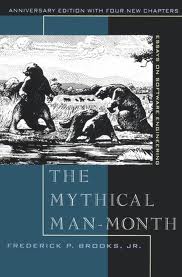
<br />10<b>. <a href="http://research.microsoft.com/en-us/um/people/blampson/33-hints/webpage.html">"Hint for Computer System Design",</a></b>&nbsp;<a href="http://en.wikipedia.org/wiki/Butler_Lampson"> Butler Lampson</a>.<br /><br />9.<a href="http://www.amazon.com/The-Mythical-Man-Month-Engineering-Anniversary/dp/0201835959"> "The Mythical Man Month,"</a> Frederick P. Brooks.<br /><br /><div>
<div><img alt="mmm.jpeg" src="http://www.kazabyte.com/mmm.jpeg" class="mt-image-left" style="float: left; margin: 0 20px 20px 0;" height="150" /></div>
</div>
<div>

</div>
<div>

</div>
<br /><br /><br /><br /><br /><br /><br /><br /><br /><br /><br />8.<a href="http://ftp.cs.ucla.edu/pub/stat_ser/r284-reprint.pdf"> "Bayesianism and Causality, or, Why I Am Only a Half-Bayesian," </a>Judea Pearl.<br />&nbsp;<br />(In 2012, Turing would have been 100 years old.&nbsp; So, I guess this is really the 99th anniversary and arguably the centenary of his birth is in 2013.&nbsp; I find this "off by one error" to be deliciously ironic.)<div>

</div>
<div>

</div>
<div>

</div>
<div>

</div>
<div>

</div>
<div>

</div>
<div>

</div> 


]]>
        
    </content>
</entry>

<entry>
    <title>It&apos;s Important to Have a Goal</title>
    <link rel="alternate" type="text/html" href="http://www.kazabyte.com/2012/04/its-important-to-have-a-goal.html" />
    <id>tag:www.kazabyte.com,2012://1.90</id>

    <published>2012-04-10T18:50:55Z</published>
    <updated>2012-04-13T00:19:28Z</updated>

    <summary>&quot;Would you tell me, please, which way I ought to go from here?&quot;&quot;That depends a good deal on where you want to get to,&quot; said the Cat.&quot;I don&apos;t much care where--&quot; said Alice.&quot;Then it doesn&apos;t matter which way you go,&quot;...</summary>
    <author>
        <name></name>
        <uri>http://</uri>
    </author>
    
    
    <content type="html" xml:lang="en" xml:base="http://www.kazabyte.com/">
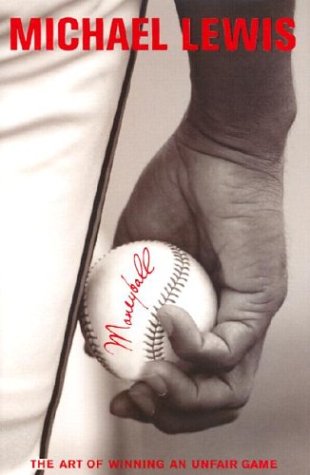
        <![CDATA[<blockquote><i>"Would you tell me, please, which way I ought to go from here?"<br />"That depends a good deal on where you want to get to," said the Cat.<br />"I don't much care where--" said Alice.<br />"Then it doesn't matter which way you go," said the Cat.<br />"--so long as I get SOMEWHERE," Alice added as an explanation.<br />"Oh, you're sure to do that," said the Cat, "if you only walk long enough."</i><br /><br />-- Alice's Adventure in Wonderland by Lewis Carroll<br /></blockquote><img alt="Moneyballsbn.jpg" src="http://www.kazabyte.com/Moneyballsbn.jpg" class="mt-image-right" style="float: right; margin: 0 0 20px 20px;" height="350" /><br /><a href="http://en.wikipedia.org/wiki/Moneyball">Moneyball: The Art of Winning an Unfair Game</a> by <a href="http://en.wikipedia.org/wiki/Michael_Lewis">Michael Lewis</a> is a great story.&nbsp; I read the <a href="http://www.amazon.com/Moneyball-The-Winning-Unfair-Game/dp/0393057658">book</a>, saw the <a href="http://www.moneyball-movie.com/">movie</a>, and heard Michael <a href="http://www.cityarts.net/event/michael-lewis/">lecture</a> about it.&nbsp; And, yet, at the end of each, I was left with the same question.&nbsp; What was this story all about?&nbsp; Or more precisely, <br /><br /><b>What was the goal of <a href="http://en.wikipedia.org/wiki/Billy_Beane">Billy Beane</a> and the <a href="http://oakland.athletics.mlb.com/">Oakland A's</a> during the time period when Billy was the general manager?</b><br /><br />Reading the book, watching the movie, hearing the lecture, and even <a href="http://en.wikipedia.org/wiki/Moneyball">searching Wikipedia</a> doesn't make this clear.&nbsp; Was it:<br /><br /><ul><li>Win a World Series?</li><li>Win the most games?</li><li>Increase yearly profitability?</li><li>Increase the market value of the team?</li></ul><p>You might say it's nitpicking.&nbsp; I say these are pretty different goals.&nbsp; And goals that might not be consistent.&nbsp; And, from an objective standard, if the goal was to win a World Series during this time period, then Billy and the A's were unambiguous failures.</p><p>Sure, they were able to win a lot of games.&nbsp; And, they were able to win a lot of games per dollar spent. Some argue this was the goal.&nbsp; But, in reading, watching, and listening, this is not clear.</p><p>I have no idea about increased profitability or increased market value. Judging by the empty seats -- rather the <a href="http://upload.wikimedia.org/wikipedia/commons/f/f0/A%27s_World_Series_titles_on_tarp_at_Oakland_Coliseum.JPG">tarp covered upper deck</a>&nbsp; -- at the <a href="http://www.coliseum.com/">Coliseum</a>, I'm guessing, they failed at the latter potential goals as well.<br /></p><p><span style="font-weight: bold;">Statistics:&nbsp; A Sound Tactical Approach</span><br /></p><p>In general, I'm a believer of the approach taken by Beane -- using math and statistics to make objective decisions. Which, lead to good results. Define metrics, test, measure, repeat.&nbsp; If you throw in some intuition and "hunches," I think it&nbsp; works even better.&nbsp; Stuff like <a href="http://en.wikipedia.org/wiki/Bayesian_inference">Bayesian Inference</a> even allows for this.&nbsp; And, going off the deep end, there's even hope for a science of causation to be even more effective.&nbsp; Thank you,<a href="http://en.wikipedia.org/wiki/Judea_Pearl"> Judea Pearl</a>.</p><p>However, in Moneyball, all the great math, statistics, and science seem to be for naught.&nbsp; Why?&nbsp; Because of the lack of clarity regarding a goal.&nbsp; What were Beane/A's trying to accomplish?&nbsp; I have not idea if they were successful.&nbsp; Whether they chose the right metrics.&nbsp; Or tests.&nbsp; How could they without knowing what they were trying to accomplish?&nbsp; (Is it possible that they did know and only I missed the point?)</p><p>In the words of Yogi Berra, misquoting Carroll:</p><blockquote><p><i>"If you don't know where you are going, you will wind up somewhere else."</i></p></blockquote><p>The good news is that, maybe "somewhere else" is somewhere good too.<br /></p><p><b>What Does This Mean for Silicon Valley Startups?</b><br /></p><p>It seems so obvious.&nbsp; <b>Having a goal is important.</b> It's strategic.&nbsp; However, sometimes we lose sight of this because we get overly wrapped up in the tactics.&nbsp; You know -- why it's important to test and measure.&nbsp; Run that A/B test.&nbsp; Understand your customers.&nbsp; And, the granddaddy of them all -- <i>the importance of the pivot.</i>&nbsp; While these tactics are important, it seems like we should be laser focused on understanding the big goal.</p><p>Maybe you measure your company against lots of visitors, big revenue, or awesome user experience.&nbsp; You might be "hitting it out of the park" on these metrics.&nbsp; And, sometimes, you prioritize your actions against these metrics.&nbsp; In the end, however, how do these numbers reflect the progress towards your goal?&nbsp; Or worse, are you spending resources to achieve these metrics and losing sight of the big picture -- your end goal?<br /></p><p>Of course, maybe I'm wrong.&nbsp; You could wander around drunk on <a href="http://gigaom.com/2010/03/05/burbn-funded-for-html-5-version-of-foursquare/">Burbn</a>, stumble onto some <a href="http://www.instagram.com/">pictures</a>, and then <a href="http://techcrunch.com/2012/04/09/facebook-to-acquire-instagram-for-1-billion/">exit for a billion dollars</a>.&nbsp; Then, it doesn't matter what your goal is or was. Without question, I'd say a billion dollars is success.&nbsp;</p><p>And, then again, Michael Lewis didn't do so bad for himself either.<br /></p><p><br /></p><p><br /></p><p>(Aside: Here's my naive opinion on what it takes to win the World Series:&nbsp; You need to put the right arms on the mound to beat the best teams in a 5 and 7 game series.&nbsp; Being able to beat a lot of mediocre teams won't get you there, even though you will win a lot of games.&nbsp; Pitching is key.&nbsp; Good pitching costs money.&nbsp; You need the pitchers to win.&nbsp; Thus, beating the best in the World Series costs money...Unless, as <a href="http://www.dpifinancial.com/the-team.html">Bill Gerth</a> reminds me, you were the <a href="http://www.baseball-reference.com/teams/CIN/1975.shtml">1975 Cincinati Reds</a>.)<br /></p> <div><br /></div>


]]>
        
    </content>
</entry>

<entry>
    <title>How Photographs Steal Your Soul (or Why We Willingly Give It Away)</title>
    <link rel="alternate" type="text/html" href="http://www.kazabyte.com/2012/03/how-photographs-steal-your-sou.html" />
    <id>tag:www.kazabyte.com,2012://1.86</id>

    <published>2012-03-26T18:28:33Z</published>
    <updated>2012-03-26T20:17:00Z</updated>

    <summary> When I was a college freshman at the University of Washington, I took Anthropology 100 -- An Introduction to Anthropology. As in many introductory college courses, students were sometimes amazed by factoids that were thrown out that were believable,...</summary>
    <author>
        <name></name>
        <uri>http://</uri>
    </author>
    
    
    <content type="html" xml:lang="en" xml:base="http://www.kazabyte.com/">
        <![CDATA[<img alt="release.png" src="http://www.kazabyte.com/release.png" class="mt-image-left" style="float: left; margin: 0 20px 20px 0;" width="300" /> <div>When I was a college freshman at the <a href="http://www.cs.washington.edu/">University of Washington</a>, I took Anthropology 100 -- An Introduction to Anthropology. As in many introductory college courses, students were sometimes amazed by factoids that were thrown out that were believable, seemingly true but maybe based on little scientific evidence. In this class, we were told that there were tribes in Africa (or maybe it was South America) that believed that<b> if your picture was taken, your soul would be stolen</b>. So, they didn't want their pictures to be taken. To this day, I'm not sure if this is true or some racist urban legend propagated by an institution of higher learning, worthy of <a href="http://www.snopes.com/">snopes</a> debunking.&nbsp; <br /><br />Fast forward to the 21st century, I now believe this at some philosophical level.&nbsp; When our picture is taken, it is potentially accessible by many.&nbsp; How that image is used, altered, and re-purposed, is largely out of our control.&nbsp; We've&nbsp; given up a little part of ourselves.&nbsp; The more pictures of us taken and used, the more we give up, and the less control of our identity that we have.&nbsp; In effect, little by little, we give up a bit of ourselves each time a picture is taken and used.&nbsp; In the end, indeed, I think we are giving away a little bit of our <span style="font-style: italic;">soul</span>, picture by picture.<br /><br />And, perhaps more interesting, our souls aren't being stolen, we are happy to give it up, without thinking about it too much.&nbsp; Typically, we are "tricked" in do so, in exchange for some benefit.&nbsp; For example, in order to see a taping of the <a href="http://www.nbc.com/the-tonight-show/">Tonight Show</a>, you are handed the card above.&nbsp; Attendance to show is billed as free.&nbsp; But when you arrive, you are told that to see the show you must agree to the "contract" on the card. After driving out to Burbank, standing in line for 2 hours, you are handed the card just before you enter.&nbsp; What are you going to do?&nbsp; You justify to yourself, not wanting to disappoint the rest of the party that you came with, what harm could come with a picture or a voice clip being used?<br /><br />I'm not a lawyer, but it seems to say that NBC can take your picture or record your voice for any reason at anytime, regardless of whether it happens during the taping of the show or some other time.&nbsp; And then use it for whatever they want anytime in the future.&nbsp; A picture taken here, an advertisement used there -- your "soul" is taken from you, just a little bit.<br /><br />Indeed, the cost of "free" is pretty expensive.&nbsp; Perhaps each individual release to use a little part of you isn't very big, but the use and loss accumulates over time.&nbsp; And you can never get it back.&nbsp; In the extreme, imagine for the moment how this affects you if you are famous and there are thousands if not millions of pictures of you that are seen a billion times.&nbsp; Have you lost control of your life and soul?<br /><br />Increasingly, as privacy concerns rage on <a href="http://www.facebook.com/">Facebook</a>, the <a href="http://www.apple.com/">iPhone</a>, <a href="http://www.google.com/">Google</a>, and <a href="http://uncrunched.com/2012/02/08/hey-path-just-nuke-all-the-data/">Path</a>, we're seemingly happy to give away a little bit of ourselves every day.&nbsp; Today, it was brought to my attention that "free give aways" or drawings on the Internet are rampant, in which the "fine print"&nbsp; allows our "soul to be stolen."&nbsp; I recently saw a contest with a prize of $10,000.&nbsp; You enter by signing up for the service and then there is a viral element that gives you more chances to win if you get other people to sign up.&nbsp; In exchange for entering (not <i>winning</i> the contest), you basically give up rights, similar to the NBC contract:<br /><br /><blockquote>"...<i>Sponsor may use the winner's name, likeness, image, voice, photographs, 
biographical information, address (city and state) and written 
statements made by the winner about the Sweepstakes and Sponsor for 
promotional purposes, in all forms of media, in perpetuity and without 
monetary payment or additional consideration." <br /></i></blockquote><br />"Free giveaway," ironically, seems to mean that not only is the giveaway free; you are giving away your soul for free. A quick search on the web show that these kinds of contests are <a href="http://www.google.com/search?q=to+the+use+of+his/her+name,+voice,+performance,+photograph/video,+Entry,+Facebook+Profile+picture,+image+and/or+likeness+for+programming,+advertising,+publicity+and+promotional+purposes+in+any+and+all+media,+now+or+hereafter+known">rampant</a>.<br /><br />Perhaps in the age where we <i>expect&nbsp;</i> Google, Facebook, and music to be "free," I shouldn't be surprised.&nbsp; We almost demand stuff should be free.&nbsp; However, we should realize that the cost of free might be expensive.&nbsp; We might just be giving away our souls.<br /><br />Update: Shortly after posting, it's been <a href="http://www.mischievous.org/">pointed out</a> to me that perhaps <a href="http://www.pinterest.com/">Pinterest</a>, the current fascination on the Interwebs, is the most egregious <a href="http://pinterest.com/about/terms/">soul sucker</a> via pictures.<br /><br /></div>

]]>
        
    </content>
</entry>

<entry>
    <title>Rick Santorum to Save Programmers</title>
    <link rel="alternate" type="text/html" href="http://www.kazabyte.com/2012/03/rick-santorum-to-save-programm.html" />
    <id>tag:www.kazabyte.com,2012://1.87</id>

    <published>2012-03-17T02:04:14Z</published>
    <updated>2012-03-21T23:22:08Z</updated>

    <summary><![CDATA[&nbsp; &nbsp; &nbsp; &nbsp; &nbsp; &nbsp; &nbsp; &nbsp; &nbsp; &nbsp; &nbsp; &nbsp;&nbsp; VS &nbsp; &nbsp;&nbsp; Unlike Al Gore, Rick Santorum&nbsp; makes no claims to being the "Technology Candidate."&nbsp; After all, he's not the inventor of the Internet.&nbsp; And, yet his...]]></summary>
    <author>
        <name></name>
        <uri>http://</uri>
    </author>
    
    
    <content type="html" xml:lang="en" xml:base="http://www.kazabyte.com/">
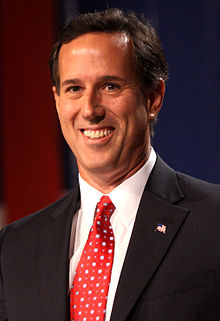
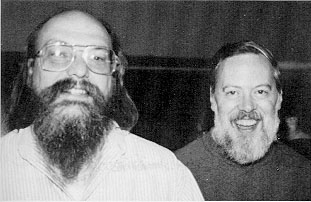
        <![CDATA[<p><img alt="rs.jpg" src="http://www.kazabyte.com/rs.jpg" class="mt-image-none" style="" height="200" />&nbsp; &nbsp; &nbsp; &nbsp; &nbsp; &nbsp; &nbsp; &nbsp; &nbsp; &nbsp; &nbsp; &nbsp;&nbsp; <font style="font-size: 1.95312em;"><b>VS</b> &nbsp; &nbsp;&nbsp; </font><img alt="linux.jpeg" src="http://www.kazabyte.com/linux.jpeg" class="mt-image-none" style="" height="200" /></p><p><br /></p><p>Unlike <a href="http://www.algore.com/">Al Gore</a>, <a href="http://www.ricksantorum.com/">Rick Santorum</a>&nbsp; makes no claims to being the "Technology Candidate."&nbsp; After all, he's not the<a href="http://www.snopes.com/quotes/internet.asp"> inventor of the Internet</a>.&nbsp; And, yet his clear Pro-Life stance will certainly impact the world of programmers, technology, and the Internet.&nbsp; While his agenda has yet to be made public, the unspoken word is clear -- &nbsp; He is here to save programmers.&nbsp; To save them from a world lacking morality.&nbsp; A world called "Unix."<br /><br /><font style="font-size: 1.95312em;"><b>The Roots</b></font></p><p><br /><img alt="KenThompsonDennisRitchie.jpg" src="http://www.kazabyte.com/KenThompsonDennisRitchie.jpg" class="mt-image-none" style="" height="100" /><img alt="richard_stallman_grande.jpg" src="http://www.kazabyte.com/richard_stallman_grande.jpg" class="mt-image-none" style="" height="100" /><img alt="bj.png" src="http://www.kazabyte.com/bj.png" class="mt-image-none" style="" height="100" /><br /><br />The beginning of modern programming&nbsp; started basically in the 1960's and flourished in the 1970's.&nbsp; The liberal agenda beginning with the Kennedy administration combined with the birth of modern "Time Sharing Systems" followed by personal computers created a "perfect storm."&nbsp; These decreasingly expensive computational devices empowered Individual, encouraged radical thoughts, and challenged the tyranny of the main frame. The radicals creating Unix had names and faces -- people like <a href="http://en.wikipedia.org/wiki/Dennis_Ritchie">Dennis Ritchie</a>, <a href="http://en.wikipedia.org/wiki/Ken_Thompson">Ken Thompson</a>, and <a href="http://en.wikipedia.org/wiki/Brian_Kernighan">Brian Kernighan</a> followed by <a href="http://stallman.org/">Richard Stallman</a>, <a href="http://en.wikipedia.org/wiki/Bill_Joy">Bill Joy</a>, <a href="http://www.mckusick.com/">Marshall Kirk McCrusick</a> and others.&nbsp; Typically long haired and bearded, these men were out to change the natural order of the time. Could they be trusted?&nbsp; While almost always denied, accusations of being communists were <a href="https://www.gnu.org/philosophy/luispo-rms-interview.html">commonplace</a>.&nbsp; Just by looking at at this motley crew, you have to wonder. <br /><br />Dig down beneath the seamy exterior, their moral fiber is quickly revealed.&nbsp; Clearly radicals, they had their own "<a href="http://www.amazon.com/Programming-Language-2nd-Brian-Kernighan/dp/0131103628">Bible</a>" -- a book far different that the Bible known to you and me -- authored by Ritchie and Kernighan.&nbsp; <br /></p><div><img alt="bible.jpeg" src="http://www.kazabyte.com/bible.jpeg" class="mt-image-none" style="" height="100" /><br /><br />Their mascot?&nbsp; The devil himself!<br /><br /><img alt="freebsd-devil.jpg" src="http://www.kazabyte.com/freebsd-devil.jpg" class="mt-image-none" style="" height="100" /><br /><br />From this, a world far different than that created by God was created.&nbsp; A world called "<a href="http://www.unix.org/">Unix</a>." This world had a language all of it's own with a lexicon not understandable by mortals:&nbsp; "Awk," "grep," "sed, "ed," "vi"....this list goes on.&nbsp; It is a secret language -- a code -- used by the technical elite -- to control, transform and rule the world.&nbsp; To special decoder, called <a href="http://docstore.mik.ua/orelly/unix/upt/ch50_09.htm">"permuted index"</a> was created to decipher the language.&nbsp; However, the decoder itself was also incomprehensible to any one on the outside.<br /><br />These people must be saved!&nbsp; Unfortunately, programmers flocked to Unix, creating a following that would change the world like no other movement, other than -- Christianity!<br /><br /><font style="font-size: 1.95312em;"><b>The Language of Evil</b></font><br /><br />Sitting in on early conversations with these bearded radicals, we are able to truly understand the evil and why they must be saved.&nbsp; The world of Unix is a world of evil. A world where we casually and commonly talk of:<br /><br />- "aborting your children" <br />- "sending signals to kill"<br />- "debating why ABORT is better than TERM"<br />- "fingering your co-workers"<br />- "operating in promiscuous mode"<br />- "chmod 666"<br />- "accessing your friends private members" (a relative new concept introduced by <a href="http://www2.research.att.com/%7Ebs/">Bjarne Stroustrup</a>)<br /><br />And, in this world, children come from an&nbsp; process of "spawning" -- fork() and exec()?&nbsp; This is not God's plan.&nbsp; This is not natural.<br /><br />Fortunately, the newbie programmers of the 21st century are sheltered from much of this unpolished and rampant evil.&nbsp; New virtual, interpreted environments on top of Unix have been created.&nbsp; Thus, new programmers need not be exposed to such evil. But, underneath bubbles the cauldron of bad.<br /><br /><b><font style="font-size: 1.95312em;">The Unspoken Agenda:&nbsp; New Hope to Free Us from the Depravity</font><br /><br /></b>Can Rick Santorum save us from the depravity of it all?&nbsp; Can Rick get to the core of the problem?&nbsp; Can he free us from this life of Hell and set us straight?<br /><br />A secret memo yet to be released says baby steps must be taken&nbsp; and core issues must be addressed first.&nbsp; His Pro-Life agenda make it clear what the priorities are:<br /><br />First, pragmatically speaking, we can't get rid of SIGABORT immediately.&nbsp; However, we must legislate that<b> whenever a process aborts a child, its parent must be notified first.&nbsp; <br /></b><br />Next, more radically, SIGKILL, SIGABORT, and kill(1) must be removed from the operating system.&nbsp; Killing is wrong and abortion even worst.&nbsp; Who will protect our unborn children?<br /><br />Next we must review the tools of the devil that cause us harm.&nbsp; Inappropriate commands are to be removed or renamed. head(1), tail(1), top(1) are at the top of the list. Clearly these overtly sexual if not homosexual references must be banned.<br /><br />We must never allow our children to be killed our aborted. Rampant deviant sexual acts -- e.g. promiscuous access to your "privates" allowed by members within in a class (just because they are "friends"), "fingering" anyone you want -- must end. Don't even get me started when a parent shares a pipe with a child.&nbsp; Stop it all!<br /><br />Last, because of its play on words that mock our nonsecular Christian world, <a href="http://www.gnu.org/software/bash/">bash</a> (the Bourne Again Shell) shall be banned.&nbsp; That's not funny.<br /><b></b></div>
<br /><b><font style="font-size: 1.95312em;">Unix: Evil at Its Core</font><br /><br /></b>Ultimately, no matter what Rick does to clean up this mess, I think it must be acknowledged -- At the core of this problem is Unix.&nbsp; And, Unix is evil, as revealed in its name -- a pun and homophone of <a href="http://en.wikipedia.org/wiki/Eunuch">eunuchs</a>.&nbsp; Indeed, it's an operating system named after and acknowledges the ultimate act of a "no mo"-sexuality.&nbsp; Ritchie, Thompson, and Kernighan mock us.&nbsp; We must rid the world of Unix.&nbsp; (Note: "Unix" is actually a play on "<a href="http://en.wikipedia.org/wiki/Multics">Multics</a>," but we'll ignore that fact.)<br /><br />Stop Unix today!&nbsp; Whether it be Linux, FreeBSD, Mac OS, or System V, they are all bad.<br /><br />Only with Rick Santorum can we eliminate this scourge on our country!<br /><br />(<a href="http://www.microsoft.com/">Microsoft</a> has not commented for this piece.) <b><br /><br /><font style="font-size: 1.95312em;">A Programmer's Response</font><br /><br /></b>Rick Santorum considered harmful.&nbsp; A statement of where he can go to has yet to be issued.<b><br /></b><br /><br /> <div><br /></div><div><br /></div><div><br /></div><div><br /></div><div><br /></div><p></p>


]]>
        <![CDATA[<br />
]]>
    </content>
</entry>

<entry>
    <title>Props to AT&amp;T.  Really.</title>
    <link rel="alternate" type="text/html" href="http://www.kazabyte.com/2012/02/props-to-att-really.html" />
    <id>tag:www.kazabyte.com,2012://1.85</id>

    <published>2012-02-16T05:48:38Z</published>
    <updated>2012-02-16T17:10:18Z</updated>

    <summary><![CDATA[ (The useful title for this post is, "How to setup a temporary international data plan with AT&amp;T.")It's easy to jump on the anti-AT&amp;T bandwagon. Typical complaints&nbsp; usually center around crappy voice coverage, a crummy website, outrages fees, or unlimited...]]></summary>
    <author>
        <name></name>
        <uri>http://</uri>
    </author>
    
    
    <content type="html" xml:lang="en" xml:base="http://www.kazabyte.com/">
        <![CDATA[<img alt="att-logo.jpeg" src="http://www.kazabyte.com/att-logo.jpeg" class="mt-image-left" style="float: left; margin: 0 20px 20px 0;" height="150" width="150" /> <div>(The useful title for this post is, <b>"How to setup a temporary international data plan with AT&amp;T."</b>)<br /><br />It's easy to jump on the anti-AT&amp;T bandwagon. Typical complaints&nbsp; usually center around crappy voice coverage, a crummy website, outrages fees, or unlimited data plans that are actually limited.&nbsp; Me?&nbsp; Admittedly, I've been an <a href="http://www.att.com/">AT&amp;T </a>defender and apologist at times -- I cut my teeth as a programmer at the fabled <a href="http://en.wikipedia.org/wiki/Bell_Labs">Bell Labs</a>, so it has a special place in my heart.&nbsp; So, I've refrained from complaining too much.<br /><br /><b>International Data Roaming Plans Are Complicated</b><br />&nbsp;<br />I've always been pained by egregious fees for data services when traveling out of the United States -- about $20/MB.&nbsp; And choosing the *right* plan was difficult and confusing. So, I always signed up for the (most expensive) <a href="http://www.wireless.att.com/learn/international/roaming/affordable-world-packages.jsp#data">data plan</a> at $199.99 for 800MB.&nbsp; AT&amp;T would prorate that for the number of days you actually used the plan within a billing cycle.&nbsp; So, if you traveled for 3 days, you'd get about 80MB of data (3 days * 800MB/30 days) for about $20 (3 days * $199.99/30 days).&nbsp; And if you went over 80MB, you could always tack on more days at about 27MB/day at $7/day, after you returned.<br /><br />Whew.&nbsp; That was still a bit complicated.&nbsp; And, even more so if your travels crossed a billing cycle.&nbsp; But, if you carefully managed your data utilization (painfully using "airplane mode" or turning off cellular service), you could get by.&nbsp; It was worth it for the cost conscience traveler.<br /><br /><b>New and Improved! Monthly Usage Prorated.&nbsp; Data Usage Not.&nbsp; Hooray! </b><br /><br />On my recent trip to Mexico, things got surprisingly better.&nbsp; A lot better, especially for short term travels.&nbsp; I found that AT&amp;T changed its policies so that they will still prorate your service based on the number of days you are traveling abroad.&nbsp; BUT, <b>they don't prorate the amount of data you get.&nbsp;</b> For the $199.99/month plan, you'd get a budget of the full 800MB, even though you only paid for 3 days of service.&nbsp; So, for $20, I was able to get (all most) all the data I wanted without worrying too much about going over my allotment.&nbsp; (Note that I wasn't able to watch unlimited Netflix movies but you get the idea.)<br /><br />Sure, I'd like to have "unlimited" data wherever I go, whenever I want.&nbsp; But,&nbsp;<b> turning on an international plan for the number of days I'm traveling&nbsp; for up to 800MB is a pretty easy</b> <b>and effective solution</b> in the mean time.<br /><br />Good job AT&amp;T, with this policy change!<br /><br />Caveat:&nbsp; I'll be singing a new tune and writing an update to complain if my bill this month doesn't work out this way!<br /></div>]]>
        
    </content>
</entry>

<entry>
    <title>97 Failures Is the Key to Success.</title>
    <link rel="alternate" type="text/html" href="http://www.kazabyte.com/2012/02/97-failures-is-the-key-to-success.html" />
    <id>tag:www.kazabyte.com,2012://1.83</id>

    <published>2012-02-02T23:21:32Z</published>
    <updated>2012-02-03T17:14:33Z</updated>

    <summary>As noted in a few blog posts, when Ben and I co-founded MerchantCircle, we were met head on with skepticism....&quot;You know nothing about media and local...or the Internet.&quot;... &quot;Look at all the dead bodies pursuing the holy grail of getting...</summary>
    <author>
        <name></name>
        <uri>http://</uri>
    </author>
    
    
    <content type="html" xml:lang="en" xml:base="http://www.kazabyte.com/">
        <![CDATA[<img src="http://2.bp.blogspot.com/-5TnGFYFRD98/TpfY7Wr3uwI/AAAAAAAAAII/FCEhTCEc9zA/s1600/Science+Experiments.jpg" height="125" /><img alt="images-2.jpg" src="http://www.kazabyte.com/merchantcircle_logo/images-2.jpg" style="margin: 0px 20px 20px 20px;" height="125" /><br /><br />As noted in a few <a href="http://www.kazabyte.com/2008/01/post-8.html">blog posts</a>, when Ben and I co-founded <a href="http://www.merchantcircle.com/">MerchantCircle</a>, we were met head on with skepticism...."You know nothing about media and local...or the Internet."... "Look at all the dead bodies pursuing the holy grail of getting to small businesses.&nbsp; How could you possibly succeed?"..."You guys are naive and crazy....but, possibly, if it all works, brilliant!"<br /><br />All of this was true.&nbsp; But we believed in the space.&nbsp; We believed we had what it took to be successful.&nbsp; And, while we didn't have the obvious answer to what was going to work, we believed we'd be able to figure it out.&nbsp; Because....<br /><br />We knew we could build a machine to figure it out.&nbsp; We'd use two tools -- statistics and an experimental methodology.&nbsp; And luck.<br /><br /><b>Hopes and Dreams Failure.</b><br /><br />Figuring out how to acquire merchants as customer at low cost and scale was a <a href="http://www.kazabyte.com/2012/02/why-local-sucks-or-maybe-not.html">key concern</a>. Our initial hunch was "build a social network of small businesses and go viral."&nbsp; It was the pitch&nbsp; when we raised the series A -- a hopes a dream story.&nbsp; We raised on a Powerpoint presentation and had no really proof points that this would work.<br /><br />And, it didn't.<br /><br /><b>New Big Idea.</b><br /><br />So we brainstormed over other ways to get customers.&nbsp; We cycled through a bunch of ideas.&nbsp; Some were reasonable but hard to proof.&nbsp; For example, we hypothesized that, even though it was 2005, there was still an opportunity build traffic through organic search.&nbsp; This was a fairly technical exercise.&nbsp; And, we knew building traffic through SEO was a long game, requiring patience.&nbsp; And it might not pan out.&nbsp; We rolled the dice anyway and went down this path.<br /><br />Fortunately, this worked out in the long run. We acquired boat loads of merchant customers organically over the years with an added bonus of large consumer traffic that converted into significant ad revenue.<br /><br /><b>Crazy Ideas.</b><br /><br /><p><img alt="chicken.png" src="http://www.kazabyte.com/chicken.png" class="mt-image-right" style="float: right; margin: 0 0 20px 20px;" height="294" width="132" />Because SEO is a long game with risk, we started to think about other ideas.&nbsp; Some of it was obvious.&nbsp; Like affiliate marketing.&nbsp; SEM.&nbsp; Email campaigns.&nbsp; Direct mail.&nbsp; Telemarketing.&nbsp; Some it was absurd.&nbsp; Radio advertising.&nbsp; Creating coupons on the fly for local businesses.&nbsp; Dressing up as a singing chicken delivering a&nbsp; telegram.&nbsp; (I can't remember if this was Mark, Daniel, or Ben.)&nbsp; Give away fishbowls to local merchants (Don't ask).&nbsp; And a bunch of others that were even more crazy.&nbsp; (<a href="http://www.twitter.com/kazabyte">DM</a> me if you want to know.)<br /><br />We probably cycled through 500 ideas.&nbsp; Nothing was too absurd.<br /><br /><b>100 Experiments. 97 Failures.&nbsp; 3 Successes. </b><br /><br />We then formulated some hypotheses.&nbsp; Which ideas were truly absurd?&nbsp; Which might work?&nbsp; We weren't certain any of them would work!&nbsp; Ultimately, we decided to execute on 100 experiments to test which ideas were good.&nbsp; We needed to build a machine and culture where we could quickly setup and execute our experiments.&nbsp; For each one, we wanted to do as little work/implementation as possible and spend less than $100.&nbsp; We figured it was no use spending a lot of time or money on a failure. &nbsp;<i> Fail fast</i>, in modern parlance.<br /><br />Our goal was to find 3 approaches that worked.&nbsp; We figured that three of them would.&nbsp; But the problem was -- it was kinda hard to tell which ones did.&nbsp; It was easy to get fooled by <a href="http://en.wikipedia.org/wiki/Type_I_and_type_II_errors">false positives and false negatives</a>.&nbsp; Or maybe sometimes we weren't so rigorous statistically.&nbsp; Or someone wanted an outcome so badly he tortured the data.&nbsp; If I never hear a faulty argument about the importance of the&nbsp; R-Squared being greater than 80%, I won't shed a tear.&nbsp; :-)<br /><br />Regardless, when we saw a glimmer of hope of an experiment with a good result, we ran with it.&nbsp; There were probably 10 of these.&nbsp; We went deeper.&nbsp; Spending $1000 each.&nbsp; When we whittled it down to three, we spent around $10,000 each.<br /><br />So, all in the cost to run all the tests to get to something that worked was less than a $100,000.&nbsp; It felt like a pretty good use of money.<br /><br /><b>3 Successes?&nbsp; Maybe.&nbsp; One Exit?&nbsp; Definitely.</b><br /><br />Did we really choose three winners?&nbsp; Were there better ideas that we falsely rejected?&nbsp; It's kind of hard to tell.&nbsp; But we were able to run with 3, in which at least one of the three worked well.<br /><br />Coupling these with a working SEO strategy, we were able to successfully bootstrap our customer acquisition efforts.&nbsp; 10,000 other steps after executing these three ideas, we guided the company to a <a href="http://www.kazabyte.com/2011/05/merchantcircle-and-replycom-li.html">successful exit</a>.<br /><br /><b>Retrospective</b><br /><br />Fast forward to 2012.&nbsp; Would this strategy would today?&nbsp; From one perspective, it seems it could.&nbsp; I just <a href="http://blog.punchtab.com/index.php/2012/02/technical-founders-do-your-bit/">read</a> how <a href="http://www.punchtab.com/">PunchTab</a> cycled through a bunch of widely different ideas before settling down on the current idea.&nbsp; It also seems to be vaguely compatible with the idea of building a<a href="http://en.wikipedia.org/wiki/Minimum_viable_product"> minimum viable product</a> within the context of a lean startup.&nbsp; However, our experiments were narrowly focused around specific customer acquisition goals within a set strategy to win on the local Internet.&nbsp; We weren't experimenting to find the "big idea." Second, we weren't so interested in iterating and refining an idea after an experiment.&nbsp; Either it was working or not, and we were moving on if not.&nbsp; Last the cost of doing an 100 experiments in search of a success was not without cost.&nbsp; At $100,000, if you are early stage, this might not be affordable.&nbsp; <br /><br />If you are boot strapping, maybe this doesn't work because of the capital requirements.&nbsp; You can't afford to do 100 experiments.&nbsp; With 97 failures.&nbsp; And, raising enough money at this early stage might be difficult.<br /><br />But for MerchantCircle, this all worked out fine.

</p>]]>
        
    </content>
</entry>

<entry>
    <title>Why Local Sucks. Or Maybe Not.</title>
    <link rel="alternate" type="text/html" href="http://www.kazabyte.com/2012/02/why-local-sucks-or-maybe-not.html" />
    <id>tag:www.kazabyte.com,2012://1.82</id>

    <published>2012-02-02T00:34:10Z</published>
    <updated>2012-02-02T08:07:26Z</updated>

    <summary><![CDATA[Chris Devore, a long-time friend, writes an interesting blog post on why you shouldn't do&nbsp; a startup in the local space.&nbsp; Or why it was a bad idea a few years back.&nbsp; I've exchanged a few comments on facebook with...]]></summary>
    <author>
        <name></name>
        <uri>http://</uri>
    </author>
    
    
    <content type="html" xml:lang="en" xml:base="http://www.kazabyte.com/">
        <![CDATA[<a href="http://twitter.com/#%21/crashdev">Chris Devore</a>, a long-time friend, writes an interesting blog <a href="http://www.crashdev.com/2012/01/top-three-reasons-not-to-do-local.html">post</a> on why you shouldn't do&nbsp; a startup in the local space.&nbsp; Or why it was a bad idea a few years back.&nbsp; I've exchanged a few comments on <a href="http://www.facebook.com/">facebook</a> with him and <a href="http://asack.typepad.com/">Andy</a> in a friendly spar.&nbsp; <a href="http://btsiv.com/2012/02/01/crash-dev-top-three-reasons-not-to-do-a-local-online-startup-and-what-to-do-instead/">Ben Smith</a> weighs in and so does <a href="http://www.mischievous.org/">Jason Culverhouse</a> with a comment on Chris' blog.<br /><br />In short, local sucks if you are an Internet entrepreneur.<br /><br />And yet, there have been a few&nbsp; big successes (<a href="http://www.mischievous.org/">OpenTable</a> and <a href="http://www.groupon.com/">Groupon</a>), a few moderate ones (<a href="http://www.topix.com/">Topix</a>, <a href="http://urbanspoon.com/">urbanspoon</a>, and&nbsp; <a href="http://www,merchantcircle.com/">MerchantCircle</a> -- a company I co-founded), and a few that I'm pretty sure are (going to be) hits. <a href="http://www.piexeurbano.com/">Peixe Urbano</a>, for example.&nbsp; Maybe it depends on the metrics you use to define success and therefore YMMV depending on your viewpoint.<br /><br />My conclusion: There was and still is money at the end of the local road.&nbsp; It's a matter of taking the right path and choosing the right angle of attack. At MerchantCircle we believed similarly to Judy's Book but executed differently.&nbsp; <br /><br /><b>Merchants First.</b>&nbsp; We knew our customers were the small local businesses.&nbsp; While others went down the path of on-boarding a large audience first, we knew where the money was.&nbsp; The local business owners.&nbsp; While we never grew a ginormous visitor base, getting to the mom and pop operators was more important. <br /><br /><b>Scale Free Customer Acquisition.&nbsp; </b>We believed that low cost customer acquisition was important to success.&nbsp; High cost of customer acquisition and high churn rates would be death.&nbsp; Unlike Groupon and <a href="http://www.reachlocal.com/">ReachLocal</a>, we were fundamentally against building a large sales force.&nbsp; We did not think that would scale. &nbsp; Knowing that the merchants were our targets, our goal was to acquire a customer at $1 a pop.&nbsp; We spent countless of hours experimenting and deploying different tactics to get in front of customers at low cost and at scale.&nbsp; Automation and software were key.&nbsp; Special kudos to Doug Kilponen for being the business driver behind all of this.<b><br /><br />Hit the Hinterlands.&nbsp; </b>Unlike many, we did not focus on the big cities (San Francisco, New York, Los Angeles, Chicago, and Seattle).&nbsp; We actually feared that successes in any single geography (big or small) would yield false positives.&nbsp; Tailoring a special plan of attack for each city or zipcode would not scale.&nbsp; Again, automation and software&nbsp; allowed us to get access into 20,000 cities, 40,000 zipcodes, and 15 million businesses, inexpensively, quickly, and effectively.<br /><br /><b>Go Lean.</b>&nbsp; Before the <a href="http://en.wikipedia.org/wiki/Lean_Startup">Lean Startup</a> movement, we decided build a company with few people.&nbsp; We called that lean.&nbsp; It was over a few beers in 2004, a friend was on pedantic rant:&nbsp; "People suck.&nbsp; You should build a company and product without people.&nbsp; A product should market itself and sell itself.&nbsp; Everything should be driven out of engineering." &nbsp; I took it to heart (even though the person revealed later that he didn't quite mean it).&nbsp; We set out drive everything out of product and engineering -- a product that marketed itself, sold itself, and was fully self service.&nbsp; We had no sales people, no marketing folks, no customer support, no separate IT organization, and no QA group.&nbsp; Eventually of course this changed.&nbsp; But the company never grew much larger than 10 people in the first two years and it was smaller than 20 nearly 5 years later.&nbsp; Because labor was the most expensive cost to the company, the small employee foot print was paramount to conserving cash.&nbsp; Further, the small team size made communication much more efficient.<br /><br /><b>Conclusion</b><br /><br />Many of our assumptions were the same as Judy's Book. But we acted on them differently.&nbsp; For example, while "turning on many cities simultaneously" didn't work for Judy's Book, it was important to our success.&nbsp; Execution is/was everything.&nbsp; <br /><br />And what about MerchantCircle in the end?&nbsp; Well, it would have been nice to have achieved the success of OPEN or GRPN.&nbsp; While we <a href="http://www.kazabyte.com/2011/05/merchantcircle-and-replycom-li.html">sold</a> the company to <a href="http://www.reply.com/">Reply</a>, I still have hope that, as part of a larger family, MerchantCircle will make a massive positive impact on local businesses and be part of a great success. <b>&nbsp; <br /><br /></b><br />]]>
        
    </content>
</entry>

<entry>
    <title>We Don&apos;t Understand Exponentials</title>
    <link rel="alternate" type="text/html" href="http://www.kazabyte.com/2011/12/we-dont-understand-exponential-functions.html" />
    <id>tag:www.kazabyte.com,2011://1.74</id>

    <published>2011-12-20T07:21:52Z</published>
    <updated>2011-12-21T02:03:42Z</updated>

    <summary><![CDATA[With increasing frequency, I'm finding myself in a conversation with a seemingly smart person in which there seems to be a fundamental misunderstanding about the properties of an exponential function. And the lack of a&nbsp; fundamental understanding of the exponential...]]></summary>
    <author>
        <name></name>
        <uri>http://</uri>
    </author>
    
    
    <content type="html" xml:lang="en" xml:base="http://www.kazabyte.com/">
        <![CDATA[<div align="center"><br /></div><img alt="Screen Shot 2011-08-05 at 8.30.46 AM.png" src="http://www.kazabyte.com/Screen%20Shot%202011-08-05%20at%208.30.46%20AM.png" class="mt-image-center" style="text-align: center; display: block; margin: 0 auto 20px;" height="438" width="388" /><br /><br />With increasing frequency, I'm finding myself in a conversation with a seemingly smart person in which there seems to be a fundamental misunderstanding about the properties of an exponential function. And the lack of a&nbsp; fundamental understanding of the exponential have grave consequences -- we may draw incorrect conclusions that have huge errors because of it.&nbsp; <a href="http://en.wikipedia.org/wiki/Albert_Bartlett">Albert A. Bartlett</a> perhaps said it best,<br /><br />"The greatest shortcoming of the human race is our inability to understand the exponential function."<br /><br /><a href="http://en.wikipedia.org/wiki/Mark_Zuckerberg">Mark Zuckerberg</a>, maybe paraphrasing Barlett recently said, "<span class="messageBody" data-ft="{&quot;type&quot;:3}">Humans
 don't understand exponential growth. If you fold a paper 50 times it 
goes to the moon and back."&nbsp; Amazingly Zuckerberg himself got it wrong;&nbsp; <a href="http://www.mischievous.org/">Jason Culverhouse</a> observes, "Actually, it goes to the Sun. I guess he 
made his point.</span>" I'll give Zuckerberg the benefit of the doubt -- he made a mistake and really does have a pretty good grasp of the exponential function.<br /><div><br />And, perhaps creating the greatest confusion of all is <a href="http://en.wikipedia.org/wiki/Ray_Kurzweil">Ray Kurzweil</a>, a thinker and engineer I respect immensely. Kurzweil is predicting that the <a href="http://www.growth-dynamics.com/articles/Kurzweil.htm">Singularity is Near</a> because we are at the "knee of the curve" of some important trends that are changing exponentially -- a "point" in time where things start to change a lot faster. However, there is an important fallacy here:<br /><br /><div align="center"><b>There is no such thing as a knee to an exponential function.</b><br /></div><br />I say this with all due respect to Mr. Kurzweil, who is is clearly much smarter than me.<br /><br /><b>Why We Are Fooled</b><br /><br />When we look at the graph of an exponential function, our visual sensors (ahem, our eyes) seem to fool us. Isn't it "obvious" where the knee of the curve is? In fact, it's not obvious that there isn't a knee. The knee always seem to be at the right "edge" of the displayed graph. In the illustration below, the knee appears to be at a different place depending on the position where we examine x.<br /><br /><img alt="noknee_ex.png" src="http://www.kazabyte.com/noknee_ex.png" class="mt-image-none" style="" height="650" /><br /><br />How can this be?<br /><br />It's not completely clear to me why we are fooled. But basically, I think it has something to do with the idea that regardless of where your observation point is, looking "left" always looks flat and small, while looking "right" always looks steep. For example, consider where we are at with hard disk drive densities. Today, we see that 1 terabyte hard disks are common place at less than $100. But, 10 years ago, $100 bought you roughly a 1 gigabyte hard disk.&nbsp; That feels pretty small but understandable. Looking back, the curve looks pretty flat, appearing to change only very slowly. In fact, though, it's growing exponentially.&nbsp; Looking forward 10 years, we'll have a 1 petabyte drive for $100.&nbsp; And the pace looks amazingly fast. And it's pretty hard to imagine what a "normal" consumer would do with a petabyte.<br /><br />Still not convinced that there is no knee to the exponential curve? Well, consider when we plot an exponential at log scale. There is no loss of information when we do this. Seems like we should be able see that knee in the curve. But of course, it's line. At log scale, the visual representation of the plot log(e^x) = x.<br /><br /><img alt="ex_and_logex.png" src="http://www.kazabyte.com/ex_and_logex.png" class="mt-image-none" style="" height="200" /><br /><br />At linear scale, it looks like the "knee of the curve" is somewhere around at 18. However, when we look at it at log scale, our eyes tell us nothing.<br /><br /><b>Why Does This Matter?</b><br /><br />"So what?," you might be asking yourselves. Is this all academic wankerage? Does it matter in any practical terms? Indeed, I think it does. Our failures to understand how fast the exponential function grows might lead us to<a href="http://en.wikipedia.org/wiki/Wheat_and_chessboard_problem"> bad economic decisions</a>. Albert Einstein is <a href="http://www.snopes.com/quotes/einstein/interest.asp">attributed</a> with saying that, "The most powerful force in the universe is compound interest" -- a hat tip to the our lack of understanding of the exponential function. And, anyone that has heard the argument why you should start putting money into a 401(k) plan earlier rather than later has probably been told some <a href="http://forums.clarkhoward.com/p/boards/ch/showthreaded.pl?Cat=&amp;Board=clarkhowardmoney&amp;Number=1578171&amp;page=20&amp;view=expanded&amp;sb=5&amp;vc=1">dubious story</a> about the power of compound interest/exponential growth. And, because the math behind the theory of our economy is based on formulas including exponentials, it's frightening that most politicians don't grok the exponential either. Chris Martenson tells a <a href="http://www.chrismartenson.com/crashcourse/chapter-1-three-beliefs">good story</a> regarding the perilous situation we are in. &nbsp; Agree with him or not, it's good food for thought.&nbsp; Not understanding the power of the exponential will result in us making bad decisions. Finally, the next time you hear some some talk about exponential growth with just a data point or two (or three), be very weary -- such "curve fitting" is an error due to mathematical ignorance at best or deliberately misleading as worst.<br /><br />Second, as software engineers, we should be careful not to implement solutions that run in exponential time.&nbsp; And, in considering the problems we are attempting to solve, we should understand why it might be theoretically impossible to find a solution that we can't solve in less than exponential time and therefore seek to define different problems to solve.&nbsp; Or implement a heuristic instead. Such analysis allows us to understand the "boundary of the solution space" for the problems we want to solve. While this might all sound like theoretical esoteria, <a href="http://mpsharp.com/blog/2011/09/11/rubyinline-tricks-and-tips/">understanding these algorithm complexities</a> makes us better engineers. In short, understanding the potentially intractability of solving some problems in less than reasonable/"exponential" time is perhaps the <a href="http://en.wikipedia.org/wiki/P_versus_NP_problem">most important unanswered question in theoretical computer science</a>. (Note: For the non-computer scientists, I apologize for the vague and jargon rich language here in this paragraph.)<br /><br />Last, for entrepreneurs, I'm sure you've run into venture capitalists that are all hot on businesses that are growing purportedly virally/exponentially. And, of course, in attempts to make a good investment, they want to put money in at the "knee of the of curve" (or where the curve "hockey sticks"). "Where is it?" you are asked. You should think carefully about how you are going to answer this question that doesn't quite make sense.&nbsp; It's quite the "gotcha."<br /><br />Hopefully, you have an understanding of the math of the exponential function and why we are often seduced by it. Then you won't be fooled by faulty thinking, and, further, you can build a&nbsp; rhetorical argument around the magic of the exponential function for your own gain. Good luck!<br /><br /><br /><br /><br /></div><div><br /></div>

]]>
        <![CDATA[<br />]]>
    </content>
</entry>

<entry>
    <title>Math vs. Technology:  Inertial Guidance vs. GPS? (The Downing of a Drone)</title>
    <link rel="alternate" type="text/html" href="http://www.kazabyte.com/2011/12/math-vs-technology.html" />
    <id>tag:www.kazabyte.com,2011://1.81</id>

    <published>2011-12-16T19:18:23Z</published>
    <updated>2011-12-17T00:07:09Z</updated>

    <summary><![CDATA[ &nbsp; &nbsp; I've been following the news about the recently Iranian hijacked US drone with some fascination.&nbsp; I'm a bit surprised by the lack of coverage -- or maybe not.&nbsp; Perhaps there are sensitivities that haven't been revealed. So...]]></summary>
    <author>
        <name></name>
        <uri>http://</uri>
    </author>
    
    
    <content type="html" xml:lang="en" xml:base="http://www.kazabyte.com/">
        <![CDATA[<img alt="drone.jpg" src="http://www.kazabyte.com/drone.jpg" class="mt-image-none" style="" height="100" /> &nbsp; &nbsp; <img alt="sram.jpeg" src="http://www.kazabyte.com/sram.jpeg" class="mt-image-none" style="" height="100" /><br /><br />I've been following the <a href="http://www.csmonitor.com/World/Middle-East/2011/1215/Exclusive-Iran-hijacked-US-drone-says-Iranian-engineer">news</a> about the recently Iranian hijacked US drone with some fascination.&nbsp; I'm a bit surprised by the lack of coverage -- or maybe not.&nbsp; Perhaps there are sensitivities that haven't been revealed. So maybe keeping it all under wraps is extremely important, even though the information flow is a bit leaky.&nbsp; Many <a href="http://www.guardian.co.uk/world/2011/dec/12/obama-iran-downed-us-spy-drone">parallels</a> have been drawn between this incident and the <a href="http://en.wikipedia.org/wiki/1960_U-2_incident">downing of a U2 plane</a> in 1962.<br /><br />Of particular personal interest to me, is the navigation (or <i>guidance</i>) system used to guide and direct the drone.&nbsp; It appears that the drone relied on <a href="http://en.wikipedia.org/wiki/Global_Positioning_System">GPS</a> (Global Positioning System) for navigation.&nbsp; Of course, GPS is the same technology used for your car navigation system and all those cool location based services you use on your IPhone.&nbsp; Reports indicate the drone was compromised through an attack vector on the GPS navigation system. (Side note:&nbsp; I've watched with equal fascination how easy it is to <a href="http://www.autosec.org/">compromise your automobile</a> through really unsophisticated attacks.)&nbsp; From the Christian Science Monitor Report,&nbsp; Iranian specialists&nbsp; reconfigured the drone's GPS coordinates to make it land in Iran at what the drone thought was its actual home base in Afghanistan.<br /><br />Certainly, if this is true, the security system that allowed access to the navigation system was compromised.&nbsp; So, there is some fault in the design/implementation of that system.&nbsp; The obvious fault lies here.<br /><br />However, stepping back, maybe there's a more strategic design flaw?<br /><br />Serious design considerations for how to build "modern" navigation/guidance system were contemplated probably as early as <a href="http://ipv6.nasa.gov/multimedia/podcasting/jpl-sputnik-20071002.html">Sputnik -- the Beep Heard Round the World</a> in 1957. &nbsp;&nbsp; And, as guidance systems for <a href="http://en.wikipedia.org/wiki/LGM-30_Minuteman">Minuteman</a>, <a href="http://en.wikipedia.org/wiki/AGM-69_SRAM">SRAM</a>, the <a href="http://en.wikipedia.org/wiki/Rockwell_B-1_Lancer">B1</a>, and all commercial airline systems were designed and deployed, an approach that did not rely on GPS was developed.&nbsp; The design goal was to build a guidance system that was<b> completely self contained</b> and thus not reliant on any external systems.&nbsp; In particular, <b>any system relying on GPS was rejected</b>.&nbsp; The fear was that&nbsp; external systems, such as GPS, could be compromised, especially through&nbsp; <a href="http://en.wikipedia.org/wiki/Electromagnetic_interference">EMI</a> -- Electromagnetic Interference (resulting from enemy jamming or emissions from a nuclear blast).&nbsp; Such compromises would render the navigation systems useless.<br /><br />So, what was developed instead of GPS for navigation?&nbsp; <br /><br />Basically, <b>math</b> and a <b>spinning top</b> -- a gyroscope.&nbsp; Using a <a href="http://en.wikipedia.org/wiki/Kalman_filter">Kalman filter</a>, a gyroscope (to make measurements in the physical world), and a&nbsp; pretty unsophisticated computer (that had less than few hundred bytes of memory) <a href="http://en.wikipedia.org/wiki/Inertial_navigation_system"><i>inertial guidance systems</i></a> were built.&nbsp; Missiles and airplanes were completely autonomous and self contained from external systems, hence insusceptible to compromises to GPS failures or communication attacks on such systems.<br /><br />[I don't quite remember the math involved.&nbsp; It had something to do with an optimization allowed by the Kalman filter so that instead of doing an NxN matrix inversion in O(n^3), the problem was reduced to inverting N*N 1X1 matrices in O(n^2).]<br /><br />So, the take away for me today is that sometimes you need to take a step back from the problem you are solving.&nbsp; Look at the big picture.&nbsp; Maybe we're overly reliant on technology.&nbsp; I romantically believe that math is the answer to many problems.<br />]]>
        
    </content>
</entry>

<entry>
    <title>Season&apos;s Greetings</title>
    <link rel="alternate" type="text/html" href="http://www.kazabyte.com/2011/12/seasons-greeting.html" />
    <id>tag:www.kazabyte.com,2011://1.80</id>

    <published>2011-12-02T09:38:51Z</published>
    <updated>2011-12-06T18:08:09Z</updated>

    <summary><![CDATA[(My Annual Holiday Letter, Published Here Online)Dear Friends and Family,2011 has come and gone quite quickly&nbsp; It's been an eventful year.&nbsp; So,&nbsp; I've decided to send out an end of year update for the first time in years.&nbsp; (Forgive me...]]></summary>
    <author>
        <name></name>
        <uri>http://</uri>
    </author>
    
    
    <content type="html" xml:lang="en" xml:base="http://www.kazabyte.com/">
        <![CDATA[<p><img alt="Screen Shot 2011-11-30 at 3.21.51 PM.png" src="http://www.kazabyte.com/Screen%20Shot%202011-11-30%20at%203.21.51%20PM.png" class="mt-image-none" style="" width="700" /><br /><br /><br />(My Annual Holiday Letter, Published Here Online)<br /><br /><b>Dear Friends and Family,</b><br /><br />2011 has come and gone quite quickly&nbsp; It's been an eventful year.&nbsp; So,&nbsp; I've decided to send out an end of year update for the first time in years.&nbsp; (Forgive me and hit delete now if you find this distasteful.)<br /><br /><b>It's Been a Year of Transition</b><br /><br /><img alt="Screen Shot 2011-11-30 at 2.58.50 PM.png" src="http://www.kazabyte.com/Screen%20Shot%202011-11-30%20at%202.58.50%20PM.png" class="mt-image-left" style="float: left; margin: 0 20px 20px 0;" width="75" />Less than a year ago last December, as I'm sure most of you know, my father passed away.&nbsp; In 2007, he was diagnosed with bladder cancer that had metastasized to his lungs.&nbsp; He went on to live 41 months, fighting a valiant battle.&nbsp; The silver lining&nbsp; is that, I think, he enjoyed much of that time (even though chemotherapy was so taxing) during those months.&nbsp; For me, I spent quality time with my dad and family that under other circumstances I probably would not have.&nbsp; In a strange way, I am blessed for that time.&nbsp; Here's my tribute to my dad:&nbsp; <a href="http://www.kazabyte.com/2010/12/how-the-cold-war-was-won.html">How the Cold War Was Won</a>.&nbsp; Last, I'll never again complain about getting poked in the arm by a needle for a blood draw or immunization.&nbsp; Watching my dad endure getting stuck multiple times a day on top of all the chemo makes me realize what a wuss I was when I was a kid.<br /><br /><br /><img alt="display.jpeg" src="http://www.kazabyte.com/display.jpeg" class="mt-image-left" style="float: left; margin: 0 20px 20px 0;" width="75" />Earlier this year, my <a href="http://www.kazabyte.com/2007/07/bon_odori_and_fifteen_minutes.html">grandmother</a> (Yamamoto) also passed away.&nbsp; She was 95.&nbsp; I know she enjoyed life, against the backdrop of trying yet <a href="http://seattletimes.nwsource.com/html/localnews/2003799268_bonodori21.html">colorful times</a>.&nbsp; Even in the end, she brought happiness to those at Washington Care, with her positive disposition.&nbsp; It was a bit confusing with back-to-back deaths in the family, but a time of great reflection.<br /><br />Motivated by the great care given to my father by his oncologist, Dr. Evan Yu, I decided to raise money for the Prostate Research Fund.&nbsp; Under this fund, Dr. Yu conducts much of his research in bladder cancer.&nbsp; I figured that there was no better way to honor my dad than supporting Dr. Yu through this fund.&nbsp; And, in turn, this effort was the seed of the ideas for my current company:<br /><br /><br /><b>Charity Blossom</b><br /><img alt="Screen Shot 2011-11-30 at 3.04.29 PM.png" src="http://www.kazabyte.com/Screen%20Shot%202011-11-30%20at%203.04.29%20PM.png" class="mt-image-left" style="float: left; margin: 0 20px 20px 0;" height="50" /><br /><br /><br /><br /><br />At <a href="http://www.charityblossom.org/">Charity Blossom</a>, we're bringing donors and donations to charities and nonprofits.&nbsp; I founded this company with Jason Culverhouse, a long time friend and colleague who I worked with at both BroadVision and MerchantCircle.&nbsp; Our goal is to transform the charitable giving industry by making donating easy, efficient, and fun -- all on-line.&nbsp; Here's my short plug for Charity Blossom.&nbsp; Can you:<br /><br /></p><ol><li><b>Please visit us at <a href="http://www.charityblossom.org/">www.charityblossom.org</a> (and&nbsp; like us on Facebook <a href="http://bit.ly/vKLuCp">bit.ly/vKLuCp</a></b><b>).</b></li><li><b>If you are making charitable donations online, checkout <a href="http://www.charityblossom.org/">Charity Blossom</a> to do so.</b>&nbsp; We are the easiest and most efficient way to make charitable donations, we hope you do.</li><li><b>Fill out this survey on charitable giving at&nbsp; <a class="hash" href="http://bit.ly/v7Xoz6">bit.ly/v7Xoz6</a>.</b> (Especially if you don't use Charity Blossom to make a donation!)</li></ol><p><br /></p><b>Speaking of MerchantCircle</b><br /><img alt="images-2.jpg" src="http://www.kazabyte.com/merchantcircle_logo/images-2.jpg" class="mt-image-left" style="float: left; margin: 0 20px 20px 0;" height="50" /><br /><br /><br /><br /><br />While I had left the company in all official capacities (except as a shareholder) more than a year ago, I've remained keenly interested and proud of MerchantCircle, a company I co-founded in 2004.&nbsp; I'm happy to say that we sold the company to Reply in July of 2011.&nbsp; It was a good exit, and I hope the synergy between Reply and MerchantCircle yield even greater value to the local businesses that we serve.&nbsp; Here's what I had to say in a blog post: <a href="http://www.kazabyte.com/2011/05/merchantcircle-and-replycom-li.html">Like Peanut Butter and Chocolate</a>.&nbsp; Kudos to Ben for getting this deal done.<br /><br /><br /><b>Looking Forward</b><br /><br />In the light of all circumstances, 2011 has been a good year.&nbsp; I've re-connected with friends, family, and co-workers.&nbsp; I'm glad Mom and Jim are doing well.&nbsp; Charity Blossom is rocking. &nbsp; As for 2012, I'm looking forward to a banner year at Charity Blossom, hoping to see more of all of you, and starting to work of my film project about my grandfather (that's a story for another email).<br /><br />Hope the end of 2011 is good for you and that 2012 is even better!<br /><br />Regards,<br /><br />Wayne<br /><br />Take our Charitable Giving Survey: <a href="http://bit.ly/v7Xoz6">http://bit.ly/v7Xoz6</a> or <br />Make a&nbsp; charitable donation or give the gift of a donation: <a href="http://www.charityblossom.org/">http://www.charityblossom.org<br /></a> <div><a href="http://www.charityblossom.org/"><br /></a></div><div><a href="http://www.charityblossom.org/"><br /></a></div><div><br /></div><p></p>
]]>
        

    </content>
</entry>

<entry>
    <title>Social Proof: What I Learned from Junior High School</title>
    <link rel="alternate" type="text/html" href="http://www.kazabyte.com/2011/11/social-proof.html" />
    <id>tag:www.kazabyte.com,2011://1.79</id>

    <published>2011-11-28T22:20:43Z</published>
    <updated>2011-11-30T03:20:55Z</updated>

    <summary><![CDATA[Over the Thanksgiving holiday, I took a nostalgic trip to the past -- junior high school.&nbsp; We reminisced over good times, bad times and awkward times.&nbsp; I had to say though, those years were not so horrible -- they were...]]></summary>
    <author>
        <name></name>
        <uri>http://</uri>
    </author>
    
    
    <content type="html" xml:lang="en" xml:base="http://www.kazabyte.com/">
        <![CDATA[<img alt="meeker.jpg" src="http://www.kazabyte.com/meeker.jpg" class="mt-image-none" style="" height="120" width="519" /><br /><br />Over the Thanksgiving holiday, I took a nostalgic trip to the past -- junior high school.&nbsp; We reminisced over good times, bad times and awkward times.&nbsp; I had to say though, those years were not so horrible -- they were pretty much good times.&nbsp; True, I was <b>that</b> dweeby, nerdy Asian guy with the bad haircut, glasses, and out-of-fashion clothes.&nbsp; This was when being a nerd was the furthest thing from being cool.&nbsp; But, I didn't care.&nbsp; I was blissfully happy and ignorant of what others thought.<br /><br />But, maybe this could all be attributed to a fortuitous happenstance.&nbsp; <br /><br />The head cheerleader was one of my best friends. It wasn't exactly clear why, but she was.&nbsp; I had known her for a long time. She was the arbiter and director of all things and people cool and popular. &nbsp; From that one friendship, other friendships were made. I mingled effortlessly with the pantheon of the junior high school elite and was invited to the best parties.&nbsp; It was like an episode right out of the <a href="http://en.wikipedia.org/wiki/Can%27t_Buy_Me_Love_%28film%29">Wonder Years</a>.&nbsp; <br /><br />Which brings me to my point:&nbsp; Social Proof.<br /><br />This friendship provided the Social Proof necessary for acceptance with all the cool kids.&nbsp; And, from there, I "spiraled up" to meeting other cool kids.&nbsp; <a href="http://en.wikipedia.org/wiki/Robert_Cialdini">Robert Cialdini</a>, author of <a href="http://www.amazon.com/Influence-Psychology-Persuasion-Business-Essentials/dp/006124189X">Influence: The Psychology of Persuasion</a>, would be proud....Only if I had planned it this way.<br /><br />Now, Influence is a great book -- a fun and easy read.&nbsp; It's one of those bookshelf-wonders like the<a href="http://en.wikipedia.org/wiki/The_Art_of_War"> Art of War</a> by Sun Tzu and <a href="http://www.amazon.com/Marketing-Management-Philip-Kotler/dp/0130336297/ref=sr_1_1?ie=UTF8&amp;qid=1322521957&amp;sr=8-1">Marketing Management</a> by Philip Kotler that every (aspiring) MBA or consultant should have read.&nbsp; Or at least have on the bookshelf.&nbsp;&nbsp; And, (not so) ironically, it's received social proof from the cool VC/start-up pundits -- <a href="http://500hats.typepad.com/">McClure</a>, <a href="http://www.startuplessonslearned.com/">Ries</a>, <a href="http://www.bothsidesofthetable.com/">Suster</a>.<br /><br />And, today, Social Proof seems to have popped back into the current tech world discussion:<br /><br /><a href="http://techcrunch.com/2011/11/27/social-proof-why-people-like-to-follow-the-crowd/">Social Proof Is the New Marketing</a>.<br /><br /><a href="http://www.pehub.com/127078/larry-cheng-when-the-majority-is-wrong">When Social Proof Goes Awry</a> (actually titled, "When the Majority Is Wrong," by Larry Cheng)<br /><br />and <a href="http://www.bothsidesofthetable.com/2010/07/25/understanding-the-powers-of-authority-social-proof/">A Guide to Using Authority &amp; Social Proof in Fund Raising</a> (from a while back).<br /><br />Of particular interest is Larry Cheng's article.&nbsp; I posit Social Proof is the flip-side of <a href="http://en.wikipedia.org/wiki/Groupthink">groupthink</a>, colloquially referred to as the <a href="http://intellectual-thoughts.com/Lemming%20Effect%20by%20Dr.%20Pastore.htm">"Lemming Effect</a>."&nbsp; Groupthink is where Social Proof fails. Particularly interesting is how Social Proof is manipulated ("gamed") for unearned authority.&nbsp; And, in our corner or the world, many carefully consider how to use Social Proof to get financing for one's start-up.&nbsp; From the entrepreneur's perspective, if you don't have the goods, how do&nbsp; you&nbsp; build social proof ("Fake It Till You Make It, in dotcom 1.0 parlance) in your bootstrap process?&nbsp; From the VC's perspective, can you tell when you've been "snowed" by "false" social proof?<br /><br /><a href="http://en.wikipedia.org/wiki/Can%27t_Buy_Me_Love_%28film%29"><img alt="220px-Can't_Buy_Me_Love_Movie_Poster.jpg" src="http://www.kazabyte.com/220px-Can%27t_Buy_Me_Love_Movie_Poster.jpg" class="mt-image-left" style="float: left; margin: 0 20px 20px 0;" width="150" /></a>In short, can you really convince/manipulate the head cheerleader or captain of the football team to (pretend to) befriend you?&nbsp; Which brings me to my meta-point;&nbsp; Everything I learned about getting along with others, I learned in junior high school.&nbsp; And, maybe it all works out in the <a href="http://en.wikipedia.org/wiki/Can%27t_Buy_Me_Love_%28film%29">end</a>.<br /><br />&nbsp;<br /><div><br /></div><div><br /></div><div><br /><br /><br /><br /><br /><br /><br /><br /></div>

<div><br /></div><div><br /></div><div><br /></div><div><br /></div>]]>
        
    </content>
</entry>

<entry>
    <title>Tset Gnirut:  The Reverse Turing Test</title>
    <link rel="alternate" type="text/html" href="http://www.kazabyte.com/2011/11/tset-gnirut-the-reverse-turing.html" />
    <id>tag:www.kazabyte.com,2011://1.78</id>

    <published>2011-11-16T22:29:41Z</published>
    <updated>2011-11-17T00:43:10Z</updated>

    <summary><![CDATA[The Turing Test is a well known question considered by computer scientists, especially those studying artificial intelligence.&nbsp; It's a basic question that helps us understand whether or not machines can think.&nbsp; Essentially, the Turing Test asks,"Can you tell if you...]]></summary>
    <author>
        <name></name>
        <uri>http://</uri>
    </author>
    
    
    <content type="html" xml:lang="en" xml:base="http://www.kazabyte.com/">
        <![CDATA[<p><img alt="SPTM.jpg" src="http://www.kazabyte.com/SPTM.jpg" class="mt-image-left" style="float: left; margin: 0 20px 20px 0;" width="256" />The <a href="http://en.wikipedia.org/wiki/Turing_test">Turing Test</a> is a well known question considered by computer scientists, especially those studying artificial intelligence.&nbsp; It's a basic question that helps us understand whether or not machines can think.&nbsp; Essentially, the Turing Test asks,"Can you tell if you are conversing with a person or a computer?"&nbsp; We've philosophized about this problem for 60 years.&nbsp; I think it's becoming increasingly difficult to tell.&nbsp; Consider Siri on the iPhone.&nbsp; Is there someone behind the query that is manually figuring out the answers to your questions?<br /><br />While at <a href="http://www.pubcon.com/">Pubcon</a> this past week, I've realized that there is a reverse problem that many are trying to solve.&nbsp; A problem that is equally interesting and perhaps becoming more difficult as well -- the Reverse Turing Test (which I call "Tset Gnirut").&nbsp; Tset Gnirut is also a question:&nbsp; Can a machine figure out if <i>you</i> are a human or a machine?&nbsp; There is an on going effort to solve this problem, mostly around spam.<br /><br /><a href="http://en.wikipedia.org/wiki/CAPTCHA">CAPTCHA</a> popped onto the scene a few years ago.&nbsp; Certainly, this was one form of the Reverse Turing Test.<br /><br />However, after listening to <a href="http://twitter.com/#%21/mattcutts">Matt Cutts</a>,&nbsp; I realized Google's search quality group (well, at least those fighting index spam and defining search relevance) is all about answering Tset Gnirut. Detecting link spam is all about solving this problem.&nbsp; Figuring out if link strategies are created by machines, deciding whether or not text has been created by humans or not,&nbsp; understanding if a bot is clicking on links, or understanding if a tweet or facebook post is automatically generated are all problems of Tset Gnirut.<br /><br />Machines are getting smarter and we are off-loading more and more of our consciousness to machines.&nbsp; Machines are making more decisions for us.&nbsp; Soon, the machines will <strike>figure out</strike> decide if you are a machine or not.&nbsp; When that happens, it will be an interesting world when the machines decide they would rather talk to each other than talk to us.<br /></p><p>

</p>]]>
        
    </content>
</entry>

<entry>
    <title>Putting the Band Back Together</title>
    <link rel="alternate" type="text/html" href="http://www.kazabyte.com/2011/11/putting-the-band-back-together.html" />
    <id>tag:www.kazabyte.com,2011://1.77</id>

    <published>2011-11-13T21:05:33Z</published>
    <updated>2011-11-14T21:28:20Z</updated>

    <summary><![CDATA[I tread carefully when using tired metaphors.&nbsp; However, "Putting the Band Back Together, " accurately describes the attempt to achieve success as a startup by pulling together a team from key players in a previous successful startup.&nbsp;&nbsp; The anecdotal evidence...]]></summary>
    <author>
        <name></name>
        <uri>http://</uri>
    </author>
    
    
    <content type="html" xml:lang="en" xml:base="http://www.kazabyte.com/">
        <![CDATA[I tread carefully when <a href="http://en.wikipedia.org/wiki/Sean_Parker">using tired metaphors</a>.&nbsp; However, "Putting the Band Back Together, " accurately describes the attempt to achieve success as a startup by pulling together a team from key players in a previous successful startup.&nbsp;&nbsp; The anecdotal evidence for repeat success by a successful startup team that re-forms is pretty strong.&nbsp; Consider:<br /><br /><ul><li>Newhoo-&gt;<a href="http://www.topix.com/">Topix</a></li><li><a href="http://www.blogger.com/">Blogger</a>-&gt;<a href="http://www.twitter.com/">Twitter</a></li><li><a href="http://www.expedia.com/">Expedia</a>-&gt;<a href="http://www.zillow.com/">Zillow</a></li><li>Dodgeball-&gt;<a href="http://www.foursquare.com/">foursquare</a></li><li><a href="http://www.hotwire.com/">Hotwire</a>-&gt;<a href="http://www.tripit.com/">Tripit</a><br /></li><li><a href="http://www.broadvision.com/">BroadVision</a>-&gt;<a href="http://www.merchantcircle.com/">MerchantCircle</a></li></ul><br />In these instances, a founder is able to recruit a core team from past successes to create a new company.&nbsp; Further, "re-coalescing" to work in the same, similar or adjacent space allows the players to re-create the "magic" that allowed them to be successful the first time around and leverage accumulated expertise.&nbsp; It's not a guarantee for success, but perhaps it gives your company a leg up and reduces risk.<br /><br />Why is this you ask?&nbsp; After all, isn't past performance no guarantee of future return?&nbsp; And, what of the possibilities that your team is in a "rut" and can't adapt to the rapid changes in the land of technology startups?&nbsp; Further, since you and your team have enjoyed success, are you no longer "hungry" and now "lazy?"&nbsp; Plus you are older and face the up hill batter of founded and unfounded biases against the&nbsp; old.<br /><br />All valid points.&nbsp; However....<br /><br /><b>Making a Bet on the Past</b><br /><br />The value of getting together "one mo' time" is undeniable.&nbsp; You are a proven success story.&nbsp;&nbsp; You are a team that has shown it can work together, stick it out in thick and then, and predict how others think, act, and decide.&nbsp; You know each others strengths and weaknesses.&nbsp; You are a "well-oiled" machine.&nbsp; And, to mix-in yet another metaphor, you can complete the blind, over the shoulder alley-oop without even practicing.<br /><br /><br />

<iframe src="http://www.youtube.com/embed/bMxk0ZVBRTg" allowfullscreen="" frameborder="0" height="315" width="420"></iframe>


<br /><br />Further, you are a proven success story.&nbsp; Others have confidence in your
 team because you've done it before.&nbsp; Investors are more likely to flock
 to you because of your past successes.&nbsp; You might get a "pass" from a 
skeptical investor, partner, or potential new employee only because of your track 
record.&nbsp; Possibly, odds tilt in your favor because success begets 
success.<br /><br /><b>What about Charity Blossom?</b><br /><br />At <a href="http://www.charityblossom.org/">Charity Blossom</a>, we believe this.&nbsp; We embrace this.&nbsp; We're banking the company on it.<br /><br />We're making a bet -- indeed, we've pulled together a team of known players that we've worked with, fought with, and succeeded with.&nbsp; Nearly every key early individual I hired at MerchantCircle (merchantcircle.com) is back.&nbsp; Engineers, product managers, marketing types, and biz dev managers are back in some form of another - employees, advisers, contractors, partners, and seed investors.&nbsp; Even our legal team and F&amp;A organization are staffed with people we worked with at the 'Circle.&nbsp; At Charity Blossom, we&nbsp; leverage our past experience and success in an adjacent space with similar characteristics.&nbsp; What small businesses are to <a href="http://www.merchantcircle.com/">MerchantCircle</a>, nonprofits are to <a href="http://www.charityblossom.org/">Charity Blossom</a>.<br /><br />Moreover, we tap relationship strengths that are even older and more successful.&nbsp; We've brought in some of the very successful personnel from the early days of <a href="http://www.broadvision.com/">BroadVision</a>.&nbsp; Sales people, product managers, and marketing executives from a company Jason and I help grow to a $25 billion market cap are all on board too.&nbsp; In fact, at Charity Blossom, some of us --&nbsp; Jason, myself, and few others -- are on our "third tour of duty."&nbsp; We've known each other for over 20 years.<br /><br />Of course, we don't rely only on people from our past.&nbsp; We are bringing in "new blood" too - we believe this is key.&nbsp; Even so, the initial players, the culture and "DNA" of the company, the processes, and the philosophies come from our past.&nbsp; An injection of new people bring updated and different values that we believe are essential to transforming the company for the future while we believe we must leverage our strengths from the past.<br /><br /><b>What about Investors?</b><br /><br />One thing we are carefully considering - will we bring in investors from our past?&nbsp; Or&nbsp; will we work mostly new investors?&nbsp; Certainly, we've worked with some great ones in the past (<a href="http://rusticcanyon.com/">Rustic Canyon Partners</a>, <a href="http://www.scalevp.com/">Scale Venture Partners</a>, <a href="http://steamboatvc.com/">Steamboat Ventures</a>, <a href="http://www.iac.com/">IAC</a>).&nbsp; Investor relationships are obviously key too.&nbsp; However, is&nbsp; there great strength in leveraging these past partners too?&nbsp; We think so, but we are less certain than the importance of bringing together the old operating team.<br /><br /><b>Relationship Matters (or Relationships Matter)</b><br /><br />Putting the Band Back Together hinges on a key issue - the people you used to work with must want to work with you again.&nbsp; And perhaps you must understand why.&nbsp; Do they really want to and enjoy working with you?&nbsp; Are they in it for the money?&nbsp; Do they want to work the other people you have brought on board?&nbsp; Sometimes, even if people didn't enjoy working with you in the past, they might want to do so again.&nbsp; Maybe because coming together again is just a means to an end - success.<br /><br />However, I've come to realize that if I won't enjoy working with someone, I probably won't bring him/her into the band (at least in the early stages). Life is too short.&nbsp; When I was younger, I thought differently.&nbsp;&nbsp; Stellar players are often difficult to work with.&nbsp; I'd sacrifice for the talent.&nbsp; (<i>What? That prima donna killer drummer that is difficult work with is available?&nbsp; Go for it!</i>)&nbsp; Further, the reason you hire<a href="http://www.kazabyte.com/2011/01/maybe-you-should-hire-an-a-man.html"> good management</a> is to get the best players to operate at maximum capacity while mitigating the "collateral damage" from difficult personalities. Nonetheless for the first few players, I've decided not to go with "difficult" talent, regardless how good they are.<br /><br />Ultimately, your ability to work with people again depends on the relationships you had in the past.&nbsp; Indeed <a href="http://www.pehub.com/125067/ben-smith-silicon-valley-is-a-multi-inning-game-networking-is-how-you-play/">relationships matter</a>.<br /><br /><b>Timing</b><br /><br />You can't always put the band back together because the timing might not be right.&nbsp; Regardless of how much&nbsp; former colleagues might want to work with you, it might not be the right time for them.&nbsp; Perhaps he or she just started a new gig.&nbsp; Or there are personal circumstances that prevent someone from coming on board.&nbsp; Timing is critical if you take this approach.<br /><br />Further, you really can't approach a former co-worker of your last company.&nbsp; Only when they approach you or after they leave can you engage.&nbsp; It's just too messy.&nbsp; (BTW, I'm thinking about you, Wes Mitchell.&nbsp; ☺)<br /><br /><b>Charity Blossom:&nbsp; The Reunion Tour</b><br /><br />Our core team is in place and we're ready to rock.&nbsp;&nbsp; We've taken the approach of focusing on hiring key people from a pool of people we've worked with before. Each new person that has come on board has been able to "hit the ground running."&nbsp; (Pardon yet another&nbsp; metaphor).&nbsp; A few "mix-ins"/additions have plugged in.&nbsp; But, we're largely a band doin' it again, one more time.&nbsp; Indeed, we've pulled the team together from a deep list of BraodVision and MerchantCircle colleagues that have been instrumental in our past successes.<br /><br />We're off making some music and hopefully we'll produce a monster hit!<br /><br />The Band:<br /><br /><ul><li><a href="http://www.linkedin.com/profile/view?id=219676&amp;authType=name&amp;authToken=5lVs&amp;locale=en_US&amp;pvs=pp&amp;trk=ppro_viewmore">Neerav Berry</a></li><li><a href="http://twitter.com//therealjoshcook">Josh Cook</a></li><li><a href="http://www.linkedin.com/profile/view?id=132424&amp;authType=name&amp;authToken=wIJM&amp;locale=en_US&amp;pvs=pp&amp;trk=ppro_viewmore">David Creemer</a></li><li><a href="http://www.mischievous.org/">Jason Culverhouse</a></li><li><a href="http://www.linkedin.com/profile/view?id=221028&amp;authType=name&amp;authToken=Xgre&amp;locale=en_US&amp;pvs=pp&amp;trk=ppro_viewmore">Carl Dellar</a></li><li>Dana Denault</li><li><a href="http://www.linkedin.com/profile/view?id=113201&amp;authType=NAME_SEARCH&amp;authToken=T26T&amp;locale=en_US&amp;srchid=c33d9fbc-d61e-4b74-834a-aebba422ed1e-0&amp;srchindex=1&amp;srchtotal=311&amp;goback=%2Efps_PBCK_*1_Bill_Fraser_*1_*1_*1_*1_*2_*1_Y_*1_*1_*1_false_1_R_*1_*51_*1_*51_true_*2_*2_*2_*2_*2_*2_*2_*2_*2_*2_*2_*2_*2_*2_*2_*2_*2_*2_*2_*2_*2&amp;pvs=ps&amp;trk=pp_profile_name_link">Bill Fraser</a></li><li><a href="http://www.linkedin.com/profile/view?id=4154986&amp;authType=NAME_SEARCH&amp;authToken=kNUN&amp;locale=en_US&amp;srchid=3f8ee8c0-5679-40fe-a56e-dc8b4ad72ad7-0&amp;srchindex=1&amp;srchtotal=18&amp;goback=%2Efps_PBCK_*1_Bill_Gerth_*1_*1_*1_*1_*2_*1_Y_*1_*1_*1_false_1_R_*1_*51_*1_*51_true_*2_*2_*2_*2_*2_*2_*2_*2_*2_*2_*2_*2_*2_*2_*2_*2_*2_*2_*2_*2_*2&amp;pvs=ps&amp;trk=pp_profile_name_link">Bill Gerth</a></li><li><a href="http://www.linkedin.com/profile/view?id=3808&amp;authType=NAME_SEARCH&amp;authToken=GGw4&amp;locale=en_US&amp;srchid=9037410a-dab2-4176-8a07-7744e82ce8ba-0&amp;srchindex=1&amp;srchtotal=106&amp;goback=%2Efps_PBCK_*1_Mark_Hull_*1_*1_*1_*1_*2_*1_Y_*1_*1_*1_false_1_R_*1_*51_*1_*51_true_*2_*2_*2_*2_*2_*2_*2_*2_*2_*2_*2_*2_*2_*2_*2_*2_*2_*2_*2_*2_*2&amp;pvs=ps&amp;trk=pp_profile_name_link">Mark Hull</a></li><li><a href="http://www.linkedin.com/in/mkennedy1">Mike Kennedy</a></li><li><a href="http://www.linkedin.com/profile/view?id=3440769&amp;authType=name&amp;authToken=_tVg&amp;locale=en_US&amp;pvs=pp&amp;trk=ppro_viewmore">Doug Kilponen</a></li><li><a href="http://www.linkedin.com/profile/view?id=432517&amp;authType=NAME_SEARCH&amp;authToken=1wGP&amp;locale=en_US&amp;srchid=de4ee85a-b0ee-4b27-aa9c-9600231cfbc6-0&amp;srchindex=1&amp;srchtotal=94&amp;goback=%2Efps_PBCK_*1_Jeff_Lee_*1_*1_*1_*1_*2_*1_Y_*1_*1_*1_false_1_R_*1_*51_*1_*51_true_*1_us%3A84_*2_*2_*2_*2_*2_*2_*2_*2_*2_*2_*2_*2_*2_*2_*2_*2_*2_*2_*2&amp;pvs=ps&amp;trk=pp_profile_name_link">Jeff Lee</a></li><li><a href="http://www.linkedin.com/in/johnmayerhofer">John Mayerhofer</a></li><li><a href="http://www.linkedin.com/profile/view?id=874221&amp;authType=name&amp;authToken=3HZS&amp;locale=en_US&amp;pvs=pp&amp;trk=ppro_viewmore">Liz Poggi</a></li><li><a href="http://twitter.com/#%21/tolles">Chris Tolles</a></li><li><a href="http://www.linkedin.com/in/waynekyamamoto">Wayne Yamamoto</a></li></ul><br /><b>Who Else (Or Are We Crazy to Have Drunk the Kool-Aid)?</b><br /><br />Is there really evidence for this approach?&nbsp; Perhaps looking in the "rear view mirror" to predict if this will work in 2011 might not be the best predictor for future success.&nbsp; The time and place in which these aforementioned success stories might be very different than today.<br /><br />But others are making this bet.&nbsp; Here's who I'm watching:<br /><br /><ul><li><a href="http://www.skrenta.com/">Rich Skrenta</a> is pursuing his third act with <a href="http://www.blekko,com/">Blekko</a> after Newhoo and Topix.</li><li><a href="http://www.cs.washington.edu/homes/etzioni/">Oren Etzioni</a> has launched Decide after successes with <a href="http://www.farecast.com/">Farecast</a> and Netbot.</li><li><a href="http://en.wikipedia.org/wiki/Sean_Parker">Sean Parker</a> has...well, what can I say about Sean?&nbsp; Napster, Plaxo, Facebook, <a href="http://www.spotify.com/">Spotify</a>, <a href="http://www.airtime.com/">Airtime</a>....</li></ul>I'd bet on them too.<br /><a href="http://www.linkedin.com/profile/view?id=3440769&amp;authType=name&amp;authToken=_tVg&amp;locale=en_US&amp;pvs=pp&amp;trk=ppro_viewmore"></a><br />]]>
        
    </content>
</entry>

<entry>
    <title>Job Creation -- Is Something Amiss?</title>
    <link rel="alternate" type="text/html" href="http://www.kazabyte.com/2011/11/job-creation----is-something-a.html" />
    <id>tag:www.kazabyte.com,2011://1.75</id>

    <published>2011-11-12T10:15:31Z</published>
    <updated>2011-11-16T11:08:08Z</updated>

    <summary><![CDATA[Among my friends and co-workers, we continually debate two disjoint topics that are seemingly related.&nbsp;&nbsp; I find it increasingly uncomfortable that these two discussions don't intersect because they are related.First, we&nbsp; complain and contemplate the frothy technology market --&nbsp; Are...]]></summary>
    <author>
        <name></name>
        <uri>http://</uri>
    </author>
    
    
    <content type="html" xml:lang="en" xml:base="http://www.kazabyte.com/">
        <![CDATA[Among my friends and co-workers, we continually debate two disjoint topics that are seemingly related.&nbsp;&nbsp; I find it increasingly uncomfortable that these two discussions don't intersect because they are related.<br /><br />First, we&nbsp; complain and contemplate the frothy technology market --&nbsp;<a href="http://www.kazabyte.com/2011/07/its-a-bubble.html"> Are we in a bubble or not?</a>, <a href="http://www.kazabyte.com/2011/05/merchantcircle-and-replycom-li.html">paths to exit</a>, and the <a href="http://www.geekwire.com/2011/tech-hiring-boom-leads-lucrative-offers-computer-science-grads">dearth of quality engineers and designers</a>.&nbsp; Certainly, these are high quality, "first world" problems.&nbsp; From the outside,&nbsp; I'm sure it sounds like a lot of elitist whining.&nbsp; <br /><br />On the other hand, we consider the possibility of a global (economic) melt down and decreasing wealth and power in the United States.&nbsp; The <a href="http://krugman.blogs.nytimes.com/2011/09/02/meanwhile-in-europe/">European economy</a>, the <a href="http://en.wikipedia.org/wiki/Arab_Spring">Arab Spring</a>, the<a href="http://www.zerohedge.com/"> shaky US economy</a>, and <a href="http://www.nytimes.com/2011/09/08/opinion/chinas-rise-isnt-our-demise.html">China</a> all seem to broadly contribute to this concern. Is the United States in deep doo-doo?&nbsp; Are we on a long term permanent decline?&nbsp; Most recently, it's been "what are "we going to do to <a href="http://thinkprogress.org/economy/2011/09/15/319719/in-battle-over-job-creation-ideas-gop-offers-deregulation-of-pythons/">create jobs</a>?"&nbsp; Unemployment at greater than 9% is a crisis.<br /><br />From one perspective, job scarcity threatens our country.&nbsp; From another, there aren't enough qualified workers to satisfy the demands of our industry.<br /><a href="http://www.nytimes.com/2011/09/08/opinion/chinas-rise-isnt-our-demise.html"><br /></a> What's going on here?&nbsp; It's all most as though these discussions are happening on two different planets.<br /><br />In general, it seems reasonable that "Job Creation" is a good thing.&nbsp; Having more jobs and more people employ seem to benefit society. And, yet the Information Technology industry has been systematically <i>destroying</i> jobs in the name of efficiency, productivity, and improving the quality of life for all.&nbsp; The demand for more IT workers to that destroy and industries has never been higher.&nbsp; <br /><br />Let's peel back the onion an take a look.<br /><br /><b>Are Web About Job Creation?&nbsp; Or Job Destruction?</b><br /><br />The computer industry (whether it be hardware, software, Internet) is all about automation, efficiency, and exponential change and improvement.&nbsp; This has gone on for decades.&nbsp; The impact on society is breathe-takingly noticable. Price decreases, improved product quality, frictionless communication, and access to tools and devices that were unimaginable (except for maybe Star Trek fans,&nbsp; Aurthur C. Clarke, and Jules Verne) are the results of the computer revolution.<br /><br />But, along the way, we have created a long term ecosystem that is destroys jobs as a consequence&nbsp; Insiders use the phrase <i>industry disruption</i>.&nbsp; We are really all about job <i>destruction</i>. For all the talk in Washington and in local coffee shops about <i>job creation</i> and "putting Americans back to work," the technology industry is like Godzilla, destroying jobs and industries in its path.&nbsp; Sure, the tech industry creates jobs.&nbsp; But for every job created, thousands of jobs are made obsolete by the advancement of more technology.<br /><br />And, this has certainly been a long term trend in my career. <br /><br /><img alt="telephone operator Lily Tomlin.jpg" src="http://www.kazabyte.com/telephone%20operator%20Lily%20Tomlin.jpg" class="mt-image-left" style="float: left; margin: 0 20px 20px 0;" width="150" /><br />My first job out of college was working for AT&amp;T Bell Laboratories ("The Phone Company")&nbsp; I was a software engineer writing code for the <a href="http://en.wikipedia.org/wiki/5ESS_switch">5ESS</a>, perhaps the largest and most complex distributed software system in the world at the time.&nbsp; More specifically, I built software to automate "call processing" and make the telephone system infrastructure more efficient.&nbsp; As a consequence, tens of thousands, if not hundreds of thousands, jobs went away.&nbsp; Telephone operators, telephone pole climbers, bill processing agents, customer service reps, blue collar workers who build telephone switches, and even other software engineers (because I was also building tools to make software engineering more efficient) all lost their jobs.<br /><br /><a href="http://www.kazabyte.com/79578293_7WG9T-L.jpg"><img alt="79578293_7WG9T-L.jpg" src="http://www.kazabyte.com/assets_c/2011/11/79578293_7WG9T-L-thumb-150x100-108.jpg" class="mt-image-right" style="float: right; margin: 0 0 20px 20px;" height="100" width="150" /></a>I later went to work at <a href="http://www.broadvision.com/">BroadVision</a>.&nbsp; First, we built some of the early infrastructure for ecommerce, transforming Main Street and small businesses.&nbsp; The rise of ecommerce (probably most symbolized by <a href="http://www.amazon.com/">Amazon</a>) made retailing more efficient, resulting in job losses in the entire supply chain. I then went on to&nbsp; build financial services software putting bank tellers and stock brokers out of business.&nbsp; Next up was travel.&nbsp; We built some of the first online travel systems (.e.g.<a href="http://aa.com/"> American Airlines</a>) so that you could purchase airplane tickets over the Internet.&nbsp; The travel agent industry was never the same.<br /><br />I then founded <a href="http://www.merchantcircle.com/">MerchantCircle</a>.&nbsp; While the verdict is still out on it's impact, our goal was to completely transform how small businesses bought advertising.&nbsp; The effect was going to put the Yellow Pages out of business, eliminating "feet on the street" sales forces that sold such advertising.&nbsp; Again, will tens of thousands of sales people be out of work?<br /><br />And now, at <a href="http://www.charityblossom.org/">Charity Blossom</a>, we're out to transform the charitable giving industry by making donations easy, efficient, and fun.&nbsp; Along the way, how fund raising is currently done is going to change dramatically.&nbsp; We don't know precisely how this is going to play out, but large events, fund raiser activities, and internal operations for those on the "development" side of nonprofits are going to change.&nbsp; Hopefully, for the better.<br /><br /><b>Is this Good?<br /><br /></b>On the surface and in a fairly deep examination, it seems that the progress that we've made in the Information Technology industry is good.&nbsp;&nbsp; We operate more efficiently, we have access to more stuff, and products and services are cheaper.<br /><br />Looking back, we've moved from an agrarian culture to an industrial culture, incorporated more process efficiencies (e.g. the factory assembly line), decreased the number of hours, and days we work.&nbsp; Much like technology's impact, processes got more efficient and we believed that life would get better as a result.&nbsp; And it probably has.&nbsp; More free time (i.e. less time working) promised to lead to a more fulfilled, more satisfying, and happier lives. We'd have more time to "enjoy life."<br /><br />However, as technology removes (rather "destroys") jobs and entire industries, what will happen to those that were (happily) employed in those roles?&nbsp; Are we creating new jobs or are jobs just going away?&nbsp; And, if there are new but different jobs,&nbsp; can we re-train a work force to do something completely new?&nbsp; In other words, can we "teach old dogs new tricks?"&nbsp; Or are we fooling ourselves?<br /><br />As politicians get on the "job creation" bandwagon (who could argue against this?), we are left with more sound bites than substantive solutions to our "job problem."&nbsp; I'm not sure what the solution is.&nbsp; Technology marches on.&nbsp; I'm not sure where this ultimately leads.&nbsp; A world where there are far less people working and far more machines working is coming.&nbsp; Utopian or dystopian, I know not.&nbsp; <a href="http://singinst.org/?gclid=CIGFlPC5tKwCFYwaQgodbTIPIA">That point in time is near</a>.&nbsp; I can hardly wait.&nbsp; (That's a topic for a new blog post in the future.)&nbsp; In the mean time, as technologist continue to make the world a better place, a few jobs are created, millions more are destroyed, and entire industries will go away, all most overnight.<br /><br />&nbsp;<br /><br /><br /><div><br /></div><div><br /></div><div><br /></div><div><br /></div>]]>
        
    </content>
</entry>

</feed>